
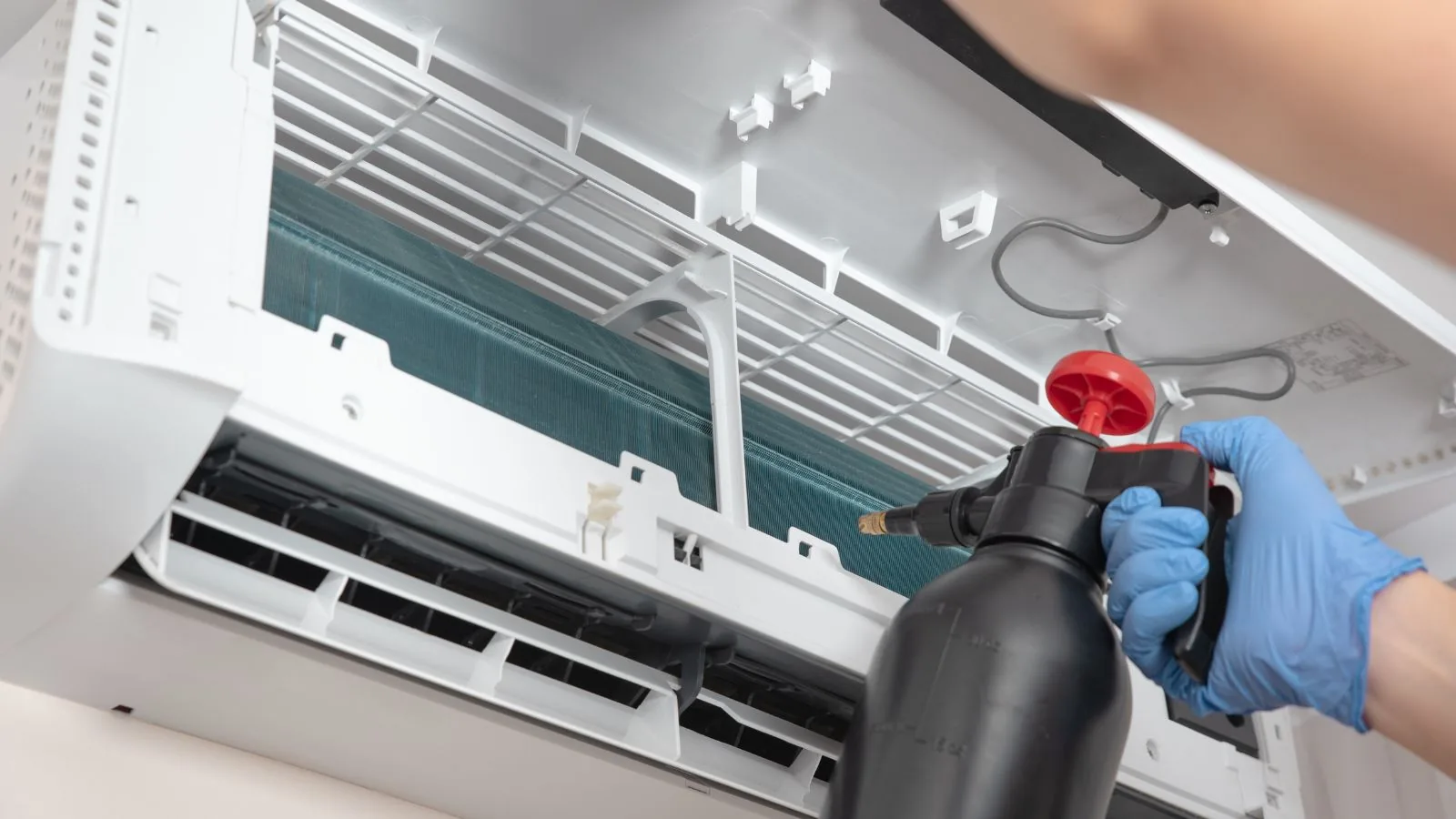
Air conditioners remove humidity from your air, and that water has to go somewhere. It collects in a drain pan and flows out through a condensate line. When that line clogs with algae and dust, the pan overflows and water goes where it should not.
Many AC leaks show up as a ceiling stain, a wet closet floor or a damp attic. Because the unit keeps running, the overflow keeps coming. Stopping the unit, drying the area and clearing the line are the three jobs that fix it.
When your AC is leaking
- Turn the system off at the thermostat so it stops making more condensate.
- Place a bucket under the drip and put towels around the base of the air handler.
- Check the drain pan and the small drain line outlet for blockage, and photograph any wet areas.
Why a Condensate Line Backs Up
The drain line is a narrow plastic pipe that carries a steady drip all summer. Algae and dust build up inside it, and a plug forms. The pan under the coil fills and spills over, or the secondary pan under the unit catches the overflow if your system has one.
Float switches can shut the unit off before a spill, but they fail or are never installed in many older homes. If the switch is missing, a spill can go unnoticed for days in an attic or a closet.
A technician can clear the line and treat it. We handle the water that already escaped.
ANSI/IICRC S500 recognizes that water sitting in insulation can degrade over time, so the standard supports removing wet insulation instead of waiting for it to dry.
Where the Water Ends Up
Attic air handlers
Water drips through insulation and onto the ceiling drywall below. The first sign is often a brown ring that grows after hot, humid days. Insulation holds the water against the drywall, which slows drying.
Closet and utility room units
Water pools on the floor and wicks into the wall base. Baseboards swell and paint lifts. If the closet has carpet, the pad absorbs water quickly.
Wall mounted and window units
Water runs down the wall or under the unit. Small leaks can rot the sill or soak the drywall underneath without much warning.
How We Dry an AC Leak
Crews start with moisture mapping to see how far the water traveled. Thermal imaging often outlines the wet drywall or insulation above a ceiling. From there, wet insulation is removed and drywall is opened or dried in place, depending on the readings.
Air movers move air across the surface, and a dehumidifier pulls moisture from the room. In humid weather, drying needs extra attention, since summer air holds a lot of water and slows the process.
What to tell the dispatcher
- Where the unit is located, such as attic, closet or wall.
- When you first noticed the leak and how long the unit ran.
- Whether the ceiling is stained, sagging or dripping.
- Whether you have turned the system off.
- Any odors, especially musty smells.
Repair Paths Compared
| What got wet | Often possible | Often needed. |
|---|---|---|
| Attic insulation | Drying if the wetting was brief | Removal if saturated. |
| Ceiling drywall | Dry in place with a firm board | Cut out sagging or stained board. |
| Closet carpet | Extract and dry the carpet | Replace the pad. |
| Wall base trim | Dry and refinish | Replace swollen trim. |
An HVAC technician repairs the unit and line. We coordinate so drying equipment does not block service access.
Keeping the Line Clear Next Summer
A yearly tune up before cooling season includes flushing the condensate line. Some owners pour a cup of diluted vinegar through the access port each season, but follow the manufacturer's advice for your unit. A float switch that shuts down the system when the pan fills is a low cost safeguard.
If your air handler sits in an attic, consider a secondary pan with its own drain. That second layer catches overflow before it reaches the ceiling.
Humid Summers and AC Water in Southwest Ohio
Summers in the Miami Valley are humid, and a cooling system runs for long stretches. That means a lot of condensate and a lot of chances for a line to clog. A drain that is fine in June can plug by August.
Warm air also slows drying. If a leak occurs during a heat wave, crews may use more dehumidification to bring the room back to normal. Running the AC can help once the leak is fixed, which is why timing with the HVAC technician matters.
Mold Signals After an AC Leak
Condensate is clean when it forms, but it picks up dust and algae on the way. In a damp attic or closet, it can feed mold if it sits. A musty smell near vents, dark spots on the ceiling or a sour smell when the system starts should be checked.
If you see growth, do not wipe it dry. Call so the area can be contained and handled. Fixing the leak and drying the space are the first steps in preventing mold.
What Affects the Cost of AC Leak Water Damage Repair
The scope and price are explained before work starts. These items shape the estimate.
- How long the overflow ran.
- Whether insulation or drywall must be removed.
- Room size and access, such as a tight attic.
- Humidity during drying, which can add equipment days.
- Floor type if water reached carpet or wood.
- HVAC repair, billed separately by the technician.
Tell us where your unit sits and what the water touched.
Call (844) 950-6900AC Leak Water Damage questions
Yes. Condensate can soak insulation and drywall, and a slow leak can run for weeks. A stained ceiling after a hot spell is a common sign.
Turn the system off and call within the day. It is less urgent than a burst pipe but wet insulation and drywall deteriorate quickly.
No. The stain stays until the board is dried and sealed or replaced. Painting over a damp ceiling usually fails.
It depends on how much material is wet. We explain the scope and price before work starts, so you know what is included before you decide.
Sudden overflow damage may be covered under some policies, while long term seepage often is not. Check the policy wording and talk to your agent.
Where we dispatch
We serve Middletown, Trenton and Franklin. For other appliance related causes see appliance leaks, and for ceiling repair details see ceiling water damage.