
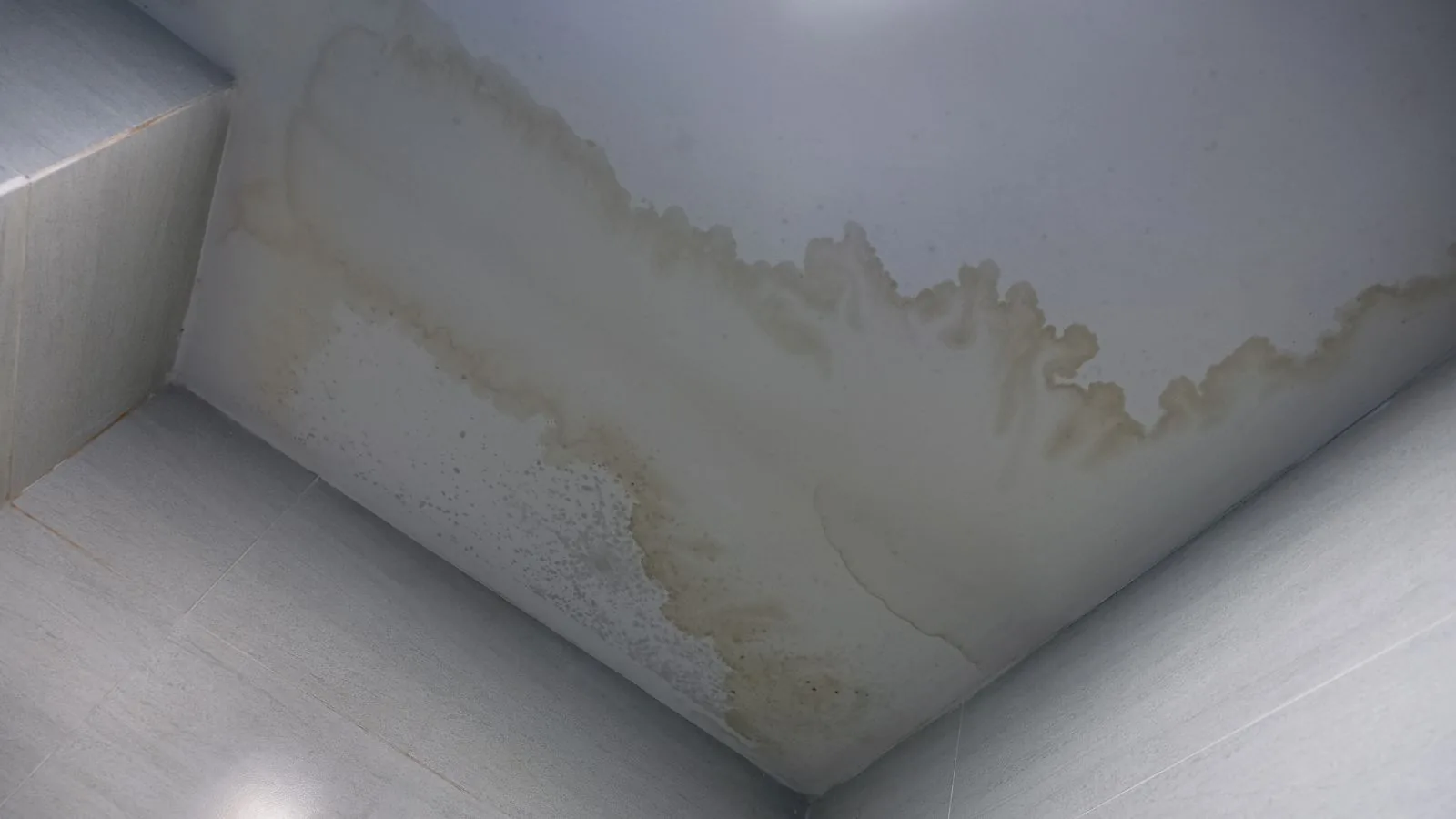
A ceiling stain is the end of a story that started somewhere above it. The water came from a roof, a pipe, a bathroom or an air conditioner, and it moved through insulation and drywall before it showed.
Fixing the paint hides the evidence but not the cause. Proper ceiling water damage repair finds the source, dries the cavity and only then restores the surface.
What to do if the ceiling is bulging or dripping
- Keep people and pets out from under any bulge, because the weight of trapped water can bring down the panel.
- Place a bucket below and, if safe, puncture the lowest point of the bulge to release water in a controlled way.
- Turn off power to the room if water is near a ceiling light or fan.
Emergency Ceiling Water Damage: Controlling the Water
Water pools in the low points of drywall and sags the panel. A bulge can hold gallons, and a small puncture at the lowest point releases it into a bucket instead of onto your floor. Do this only when you can stay clear of the drop zone.
Once the flow is controlled, the crew removes saturated insulation, cuts away drywall that cannot dry and exposes the joist bay so air can move through. The goal is a dry cavity before anything is closed up.
Under the ANSI/IICRC S500 standard, water that falls through ceiling cavities is often Class 3, which means wide saturation and a drying plan built on planned airflow.
Finding Where the Water Came From
Roof and flashing
Water from a roof leak usually enters at flashing, a worn shingle area or a vent boot, then travels along rafters before dropping. The stain on the ceiling can be several feet from the actual entry point.
Plumbing above
Bathrooms and laundry rooms upstairs are common sources. A failed shower pan, a loose supply line or a slow drain leak can feed a ceiling stain for weeks.
HVAC and attic equipment
Condensate from a furnace or air handler in the attic can overflow a clogged pan. Staining that follows a duct line often points here.
Ceiling Repair Choices Compared
| Condition | Likely approach | Why. |
|---|---|---|
| Light stain, board firm and dry | Seal and repaint after source fixed | Material is intact, but stain blockers matter. |
| Soft, sagging or crumbling drywall | Cut out and replace the section | Wet gypsum loses strength and can fail. |
| Wet insulation above | Remove and dry the cavity | Insulation holds water against wood. |
| Textured ceiling with old coating | Sample for testing before disturbing | Older coatings may need special care. |
Older homes in Middletown may have textured ceilings applied decades ago. If your house is older, ask about testing before any scraping or sanding.
Steps From Call to Dry Ceiling
- Dispatcher gathers location, source and visible damage.
- Crew controls active water and protects the floor.
- Moisture mapping identifies the wet area above.
- Wet insulation and drywall are removed as needed.
- Air movers and dehumidifiers dry the cavity.
- A repair handoff lists what to rebuild.
Documentation at each step helps with claims. Photos of the stain, the opening and the meter readings show the adjuster what was found.
Why the Attic Matters
Most ceiling leaks have a story in the attic. Insulation compresses when wet and stays damp for weeks. Rafters and sheathing can show dark staining or soft spots. Checking above the stain tells you whether the source is active.
If you can reach the attic safely, look for daylight at roof penetrations, damp insulation and water trails on framing. Do not walk on joists you cannot see. Photograph what you find so the roofer and the adjuster see the same picture.
Wet insulation is removed because it keeps water against wood. New insulation goes back only after the framing reads dry.
Mold Risk Above the Ceiling
A ceiling cavity is a closed, dark space. If it stays damp for more than a couple of days, mold growth becomes more likely. That is the reason crews open the bay rather than painting over the stain.
If you see fuzzy growth, black spotting or smell must on the ceiling, mention it when you call. Do not scrub it dry, since that spreads spores. The crew will contain the area and handle it as part of the plan.
A dry cavity and a repaired source are what stop mold. Cosmetic fixes alone do not.
What Affects the Cost of Ceiling Water Damage Repair
Scope and price are explained before work starts. Typical drivers include the items below.
- Size of the wet area and number of rooms affected.
- Whether the source is already repaired.
- Insulation removal and replacement.
- Drywall removal and equipment days.
- Ceiling height and access.
- Whether the room below also needs floor drying.
Share a photo description and the room location and we will outline the first steps.
Call (844) 950-6900Ceiling Water Damage Repair questions
It can be. A bulging ceiling can collapse, and water near lights is an electrical hazard. The emergency line is open around the clock for ceiling water problems.
If it is safe to stand clear, a small hole at the lowest point lets water drain into a bucket. If you are unsure, leave the room and call.
It can if the source is not fixed and the area is not dry. A stain blocking primer helps, but only after the cause is repaired and the cavity dries.
Rain related stains point to the roof. Stains that appear regardless of weather, or that sit under a bathroom, point to plumbing. A moisture survey can narrow it down.
Sudden events such as a pipe burst are often covered, and long term seepage often is not. Check your policy and speak with your agent.
The cost depends on how large the wet area is and whether insulation and drywall must come out. We explain the scope and price before work starts.
Where we dispatch
We serve Middletown and nearby Trenton and Franklin. Related help includes storm damage cleanup and wall and drywall repair.