
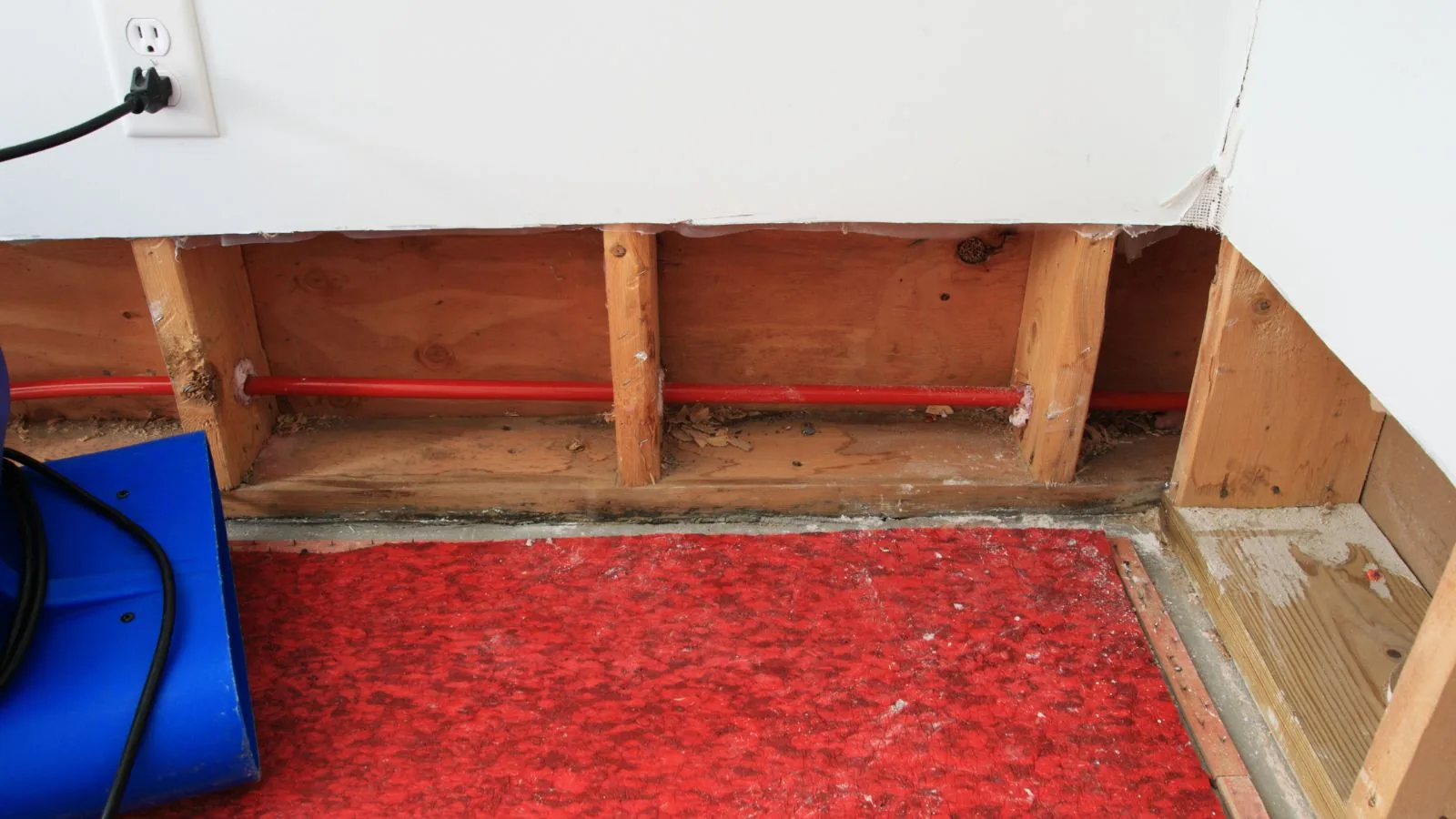
Drywall is gypsum between paper layers. When it gets wet, the paper bubbles and the gypsum softens. A small leak can leave a stain, while a larger one can bring a wall down.
Behind the drywall sit insulation, studs and wiring. All of them hold water. Good repair means opening what is needed, drying the cavity and closing it only when readings confirm it is dry.
When a wall is wet
- Turn off power to outlets on the wet wall if the breaker is dry and reachable.
- Move furniture and baseboard heaters away from the wall.
- Mark the edge of the stain with a pencil so growth can be tracked.
Signs Your Wall Has Water Damage
Bubbles in paint, brown stains, soft areas, peeling tape at seams and a musty smell are common signs. Baseboards that swell or pull away from the wall point to moisture at the bottom.
A moisture meter confirms what you see. Readings above the baseline mean water remains, even if the paint looks fine.
The ANSI/IICRC S500 standard supports drying drywall in place when it is intact and the water was clean, and removal when it is saturated or contaminated.
Cut, Dry or Replace?
| Condition | Usual approach | Reason. |
|---|---|---|
| Stained but firm and dry | Seal and repaint | Board is intact. |
| Damp but firm | Dry in place | Gypsum can recover. |
| Soft, crumbling or sagging | Cut out and replace | Strength is lost. |
| Wet insulation behind | Remove and dry cavity | Insulation traps water. |
| Mold on surface | Contain and remove | Porous material. |
A flood cut is a straight cut a foot or two above the water line. It exposes the cavity and leaves a clean edge for the repair.
Drying Inside the Wall
Air flow
Small ports or removed baseboards let air move in the cavity. Air movers push dry air through, and dehumidifiers pull the moisture out of the room.
Readings
Meters track progress at the same spots each day. Insulation is replaced only after the studs dry.
Wiring and outlets
Outlets on wet walls are checked. If water reached the wiring, an electrician should inspect before the power is restored.
Older Walls and Plaster
Many Middletown houses are older and may have plaster over lath. Plaster behaves differently from drywall. It can hold water, crack and loosen from the lath.
If your home has older walls or ceilings with textured coatings, mention that when you call. Some older materials need testing before they are disturbed.
Why Insulation Behind the Wall Matters
Fiberglass insulation soaks up water and holds it against the stud and drywall back. In exterior walls, that dampness can last a long time. Removing wet insulation is often the key to a fast dry.
Foam insulation behaves differently. It resists water but can trap it behind. Crews check the type before they decide. If the wall is a plaster and lath assembly, the approach changes again.
Dry insulation can often be reused if it was never wet. Anything that was saturated is replaced.
Mold, Smell and Painting Too Soon
Paint hides stains but not moisture. Painted drywall that is still wet will blister again. Mold can start in a few days inside a damp wall. The musty smell of a wall cavity is a clue even when the surface looks fine.
Do not paint or wallpaper until readings are at baseline. If you see growth, call before you scrub it. Disturbing mold can spread spores.
Primer that blocks stains is a good finishing step once the wall is dry and the leak source is repaired.
Repair Handoff After Drying
When the wall reads dry, a drywall contractor patches the cut, tapes and finishes the seam, then paints. Ask them to match the texture of the surrounding wall.
We provide a list of what was removed and the final readings. That list guides the contractor and makes it easier to price the repair.
Keep the paperwork together. It helps with insurance and with any future sale of the home.
What Affects the Cost of Wall and Drywall Water Damage Repair
Scope and price are explained before work starts. The main factors are below.
- Size of the wet area.
- Whether insulation is wet.
- Wall type such as drywall or plaster.
- Equipment days.
- Number of rooms affected.
- Patching, texture and paint, handled by a contractor.
Tell us where the wall is wet and what you see.
Call (844) 950-6900Wall and Drywall Water Damage questions
Often yes if it is firm and dried quickly. Soft, crumbling or sagging drywall is cut out.
Only where readings show water. Small ports or cuts let crews dry the cavity without tearing out whole walls.
Wait until readings match the baseline. Painting wet drywall traps moisture and causes peeling.
It depends on the size of the area and drying time. We explain the scope and price before work starts.
Sudden events are often covered. Slow leaks often are not. Check your policy.
Where we dispatch
We serve Middletown, Trenton and Franklin. Related help includes ceiling water damage and structural drying.