
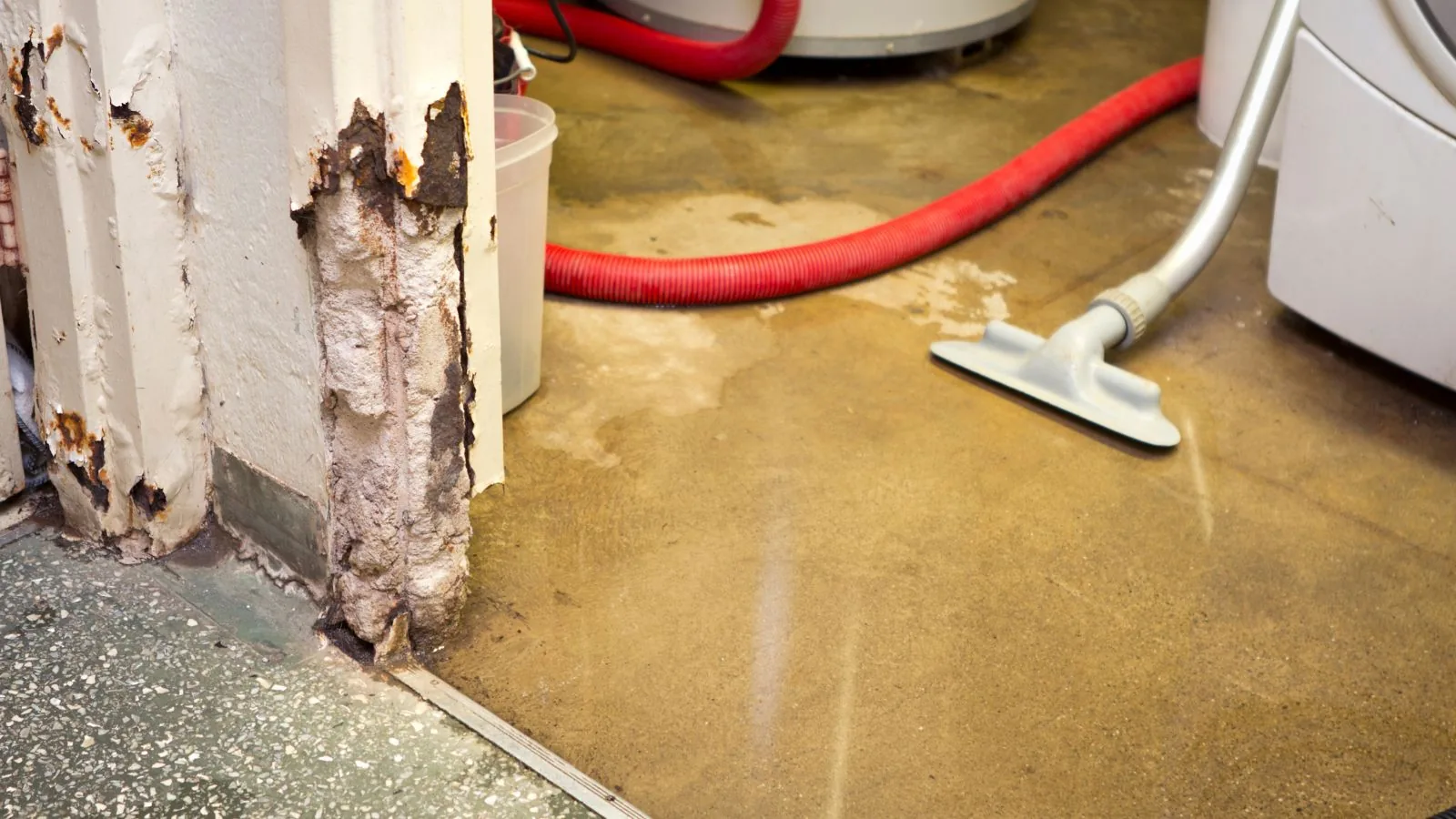
Basements sit below the water table in many places, which makes them the first rooms to flood. Water can arrive through floor drains, wall cracks, window wells or a failed sump pump.
Once inside, it soaks stored boxes, carpet, drywall and any finished space. Mechanical equipment such as furnaces and water heaters sit low, so shutting off power is often the first safety step.
What to do when your basement is taking on water
- Do not walk into standing water if it could reach outlets, a panel or a furnace.
- Shut off power at the main if the panel is in a dry spot and you can reach it safely.
- Move items from the lowest shelves and photograph the water level.
Emergency Basement Water Damage: Safety and Pump Out
Electric shock is the main danger in a flooded basement. If water reaches outlets or the panel, stay out and call an electrician or the utility. Gas appliances should be checked before restart.
Once it is safe, crews use submersible pumps for depth and extractors for the final film. The water is removed in stages so walls are not stressed by sudden changes in pressure outside.
ANSI/IICRC S500 calls for safety checks and a category assessment before drying begins, which is why electrical hazards and the water source are reviewed first on a basement job.
Why Basements Take Water
Sump pump failure
Pumps fail from power loss, stuck floats or age. A battery backup extends protection during a storm outage. Test the pump yearly by pouring water into the pit.
Floor drain backup
Municipal systems can back up during heavy rain. A floor drain that bubbles or smells is a warning. A backwater valve may reduce the risk.
Wall seepage and window wells
Cracks and poor drainage let water seep through walls. Clogged window well drains overflow into basement windows.
Drying and Rebuilding a Finished Basement
Finished basements need careful drying. Carpet and pad are extracted or removed, wet drywall is cut above the water line and insulation is discarded. Studs and slab are dried with air movers and dehumidifiers.
Concrete holds water. Even after the floor looks dry, the slab and block walls release moisture for days. Readings tell when it is safe to rebuild.
| Finish | Often saved | Often removed. |
|---|---|---|
| Painted concrete | Yes | Rarely. |
| Carpet over pad | Case by case | Pad nearly always. |
| Drywall to a few inches | If cut and dried | Wet sections. |
| Stored boxes | Rarely | Usually. |
| Wood framing | Yes if dried | If rot or mold present. |
Mold Prevention in Wet Basements
Basements stay cool and humid, which suits mold. Fast drying is the first defense. A dehumidifier that runs after the job keeps humidity under control.
If you see growth, mention it when you call. The crew will contain and handle it properly. See our sewage page if the water came from a drain.
Sump Pumps, Backups and Power Outages
Storms that bring heavy rain often bring power outages too. A sump pump with no power cannot keep up. A battery backup or a water powered backup pump gives you a second line of defense.
Test the pump twice a year. Clean the pit of debris, check that the float moves freely and make sure the discharge pipe sends water well away from the foundation. A frozen discharge line in winter can cause a surprise failure.
If your pump runs often or fails to keep up, ask a plumber or waterproofing contractor about the cause.
Great Miami River Valley Conditions
Middletown lies in the Great Miami River valley, where the ground is flat and the water table can rise after long wet spells. That puts basements in river towns at higher risk of seepage than houses on high ground.
Check whether your property sits in a mapped flood zone using the FEMA flood map service, and ask your insurer about flood coverage. Standard policies often exclude surface flood water.
After the Great Flood of 1913, the Miami Conservancy District built dams to protect valley communities. They reduce river flood risk but they do not stop local drainage problems.
Storing Items Safely Below Grade
Use plastic bins with lids instead of cardboard. Keep boxes on shelves, not on the floor. Store photos and documents upstairs. Set the furnace and water heater on raised pads.
These steps cost little and reduce losses when water enters. Take photos of your stored items so you can list them if you ever file a claim.
What Affects the Cost of Basement Water Damage Cleanup
Scope and price are explained before work starts. The main factors are below.
- Depth and duration of water.
- Water source and category.
- Finished or unfinished space.
- Materials removed.
- Equipment days.
- Repairs to pumps, drains or walls, handled by other trades.
Tell us the depth of the water and whether the space is finished.
Call (844) 950-6900Basement and runoff questions for sloped streets are covered on our Highlands neighborhood page.
Basement Water Damage questions
Yes. Deep water threatens equipment and structure, and damage grows fast. The emergency line is open around the clock.
Small amounts, yes, but pumping too fast can stress walls and leave a wet film. A crew handles it in stages and dries afterward.
Water damage from pump failure may be covered if you have the right endorsement. Check your policy.
It depends on water depth, finishes and drying time. We explain the scope and price before work starts.
Mold can start within a few days in damp conditions. Quick drying lowers that risk.
Where we dispatch
We serve Middletown, Trenton and Franklin. Related help includes flood damage cleanup and crawl space water damage.