
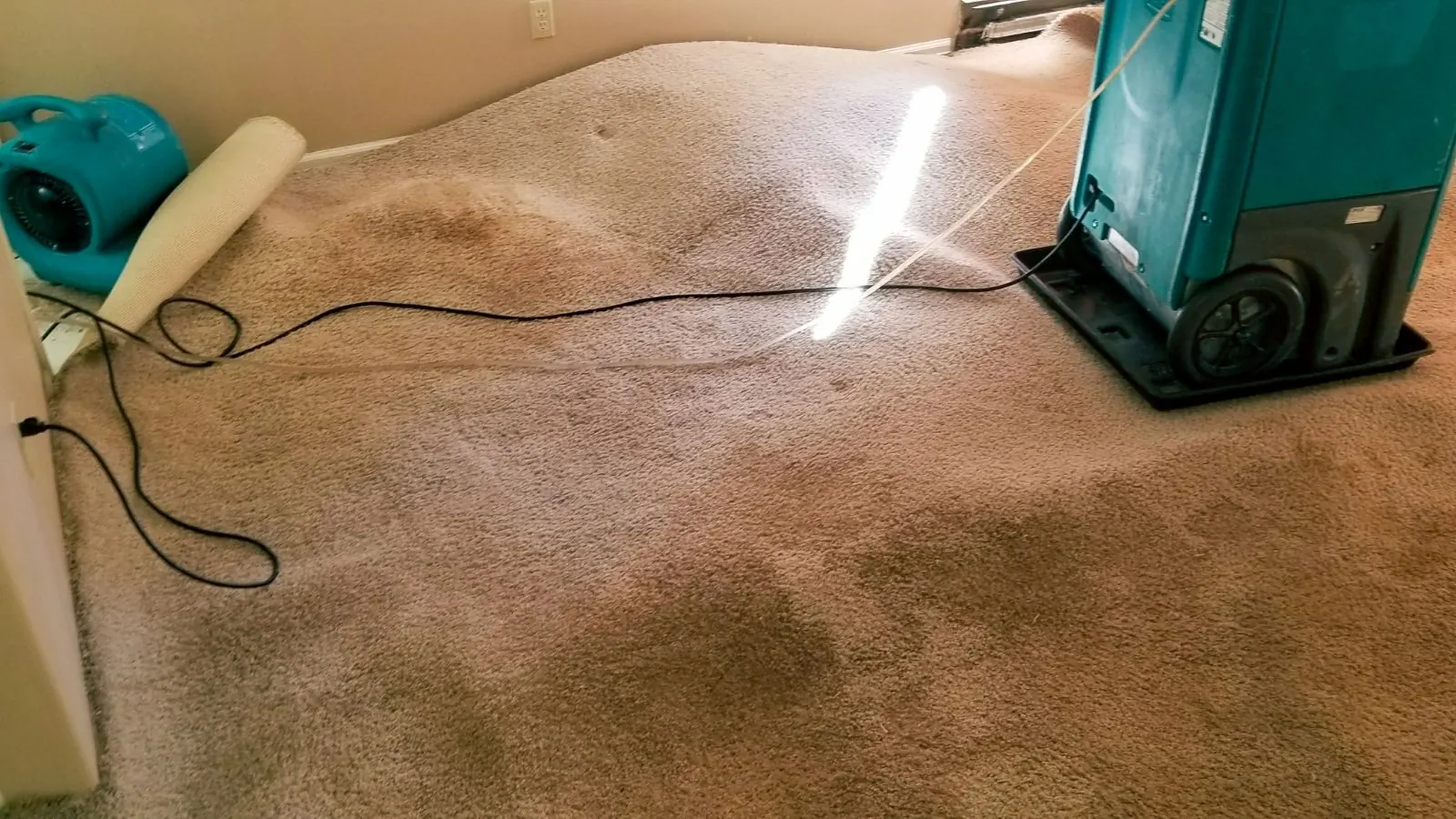
Carpet has two parts that matter in a water loss: the carpet itself and the pad beneath it. Water goes through the carpet to the pad, which holds it like a sponge. The pad then keeps feeding moisture back up and into the subfloor.
Whether carpet can be saved depends on the water type, how long it sat and what the carpet is made of. Clean water that is removed quickly gives the best result.
When carpet is soaking wet
- Lift furniture off the carpet and put foil or blocks under the legs.
- Open windows or run the AC to move air, and avoid space heaters.
- Do not use a household vacuum on wet carpet.
Is My Wet Carpet Salvageable?
Carpet from a clean water source, such as a supply line, can usually be extracted, lifted and dried. The pad is more often replaced. Carpet touched by sewage or floodwater is generally discarded.
Time matters. After a couple of days, mold and odor start to appear and bonding agents weaken. A moisture check after extraction shows how much the carpet and subfloor hold.
Under ANSI/IICRC S500, carpet exposed to clean water can often be dried or reinstalled, while pad exposed to gray or Category 3 water is generally removed.
How We Restore Wet Carpet
Extraction
Weighted extraction tools pull water from carpet and pad. Large rooms use truck mounted or high power units.
Lifting and drying
The carpet is peeled back from the tack strip, the pad is removed if needed and air movers dry both sides. The subfloor is checked and treated.
Reinstalling
Dry carpet is stretched back into place on a new pad. A carpet installer may do this stretch. We hand off a clear record.
Pad and Carpet Decisions
| Situation | Carpet | Pad. |
|---|---|---|
| Clean water, fast action | Often saved | Often replaced. |
| Gray water | Case by case after cleaning | Replaced. |
| Sewage or floodwater | Usually discarded | Discarded. |
| Water over 48 hours old | Case by case | Replaced. |
Replacing a pad is inexpensive compared with replacing carpet. A new pad also gives you a clean, dry base.
Odors, Stains and Deodorizing
Musty smell is a sign that moisture remains. Drying is the first step, followed by cleaning and, if needed, deodorizing. Masking an odor without drying only delays the problem.
Stains from dye bleeding, rust from metal furniture feet and tannin from wood furniture can show up as carpet dries. A cleaning pass after drying usually handles these.
Carpet Types and How They Handle Water
Nylon and polyester carpets handle water well, while wool takes longer to dry and can shrink. Natural backing in older carpet can break down. Berber loops can snag during lifting.
Knowing the type helps the crew choose the right tools and temperature. A quick test of dye stability can warn of bleeding. We tell you what we see before we make decisions.
Tack strips along the edges can rust and stain the carpet. They are checked and replaced when needed.
Wet Carpet on a Slab or Over Wood
Carpet over concrete behaves differently from carpet over a wood subfloor. Concrete holds moisture and releases it into the pad and carpet. Wood absorbs water and may swell.
Floor drying mats and dehumidifiers handle the slab. For wood subfloor, air movers and readings track the drying path. The pad is rarely reused in either case.
Check closet floors and corners. Water collects in low spots and under furniture where it is easy to miss.
What You Can Do While You Wait
- Remove small items from the carpet and place them on a dry surface.
- Put foil or plastic blocks under furniture legs.
- Run the air conditioner or open windows to move air.
- Avoid walking on wet carpet to prevent stretching.
- Take photos of the wet area and the water source.
These steps cost nothing and help the crew start from a better place.
What Affects the Cost of Carpet Water Damage Restoration
Scope and price are explained before work starts. The main factors are below.
- Square footage of wet carpet.
- Water category and time elapsed.
- Pad replacement.
- Equipment days.
- Subfloor condition.
- Cleaning and reinstallation.
Tell us the room size and how long the carpet has been wet.
Call (844) 950-6900How compact homes affect drying is covered on our Sherman neighborhood page.
Carpet Water Damage questions
Sometimes, if the water was clean and extraction was quick. More often the carpet is lifted so the pad and subfloor can dry.
Usually yes after a water loss. The pad holds water and is a low cost part of the system.
With proper equipment, many rooms dry in a few days. Heavy saturation takes longer.
It depends on area, water type and equipment days. We explain the scope and price before work starts.
Sudden water events are often covered. Policies differ, so check yours and ask your agent.
Where we dispatch
We serve Middletown, Trenton and Franklin. Related help includes water extraction and basement water cleanup.