
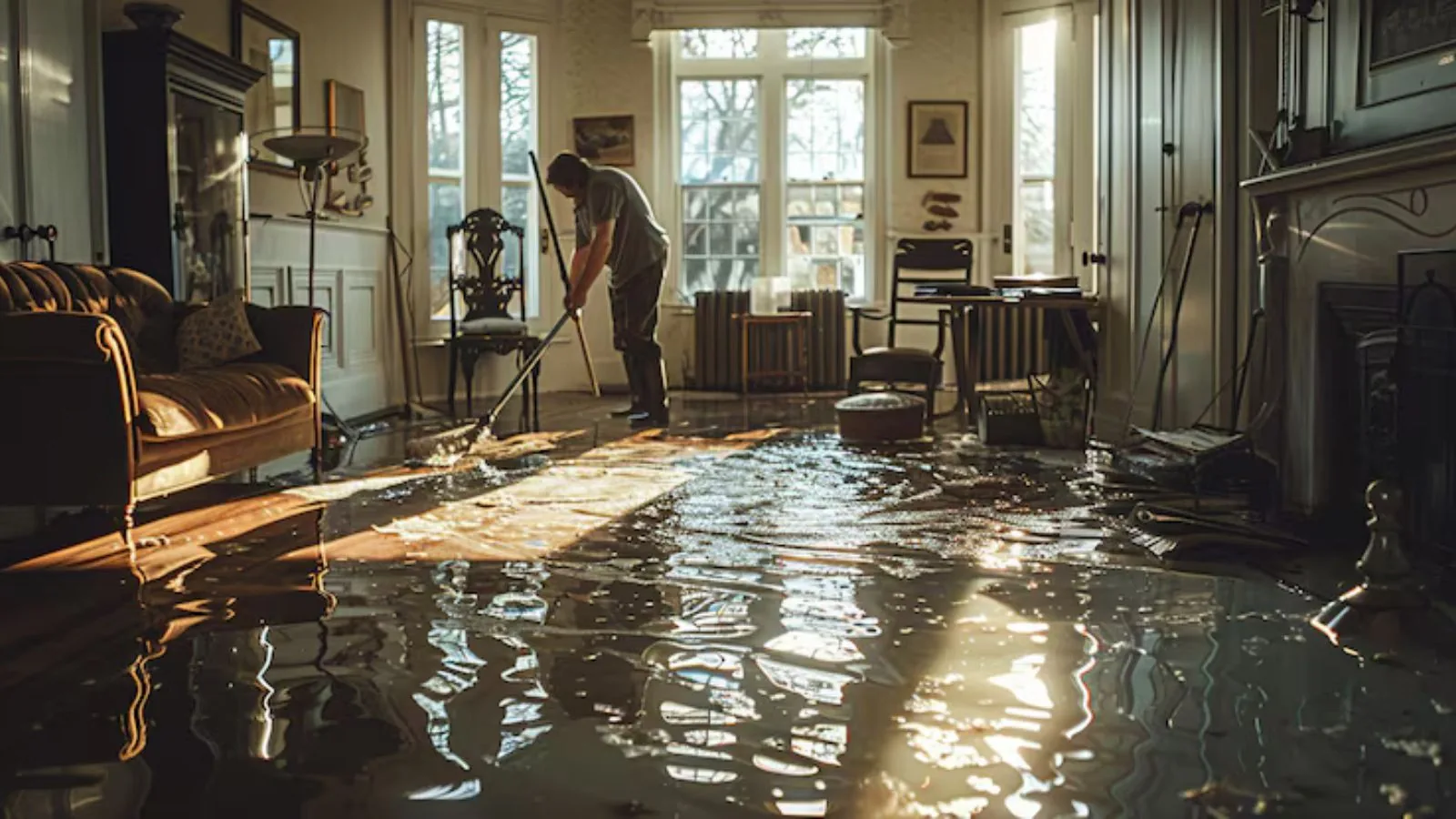
Water extraction is the first physical step in almost every water loss, and it decides how much drying work comes after it. Every gallon pulled out as liquid is a gallon that never has to be dried out of wood, plaster and insulation as vapor.
Crews working a Middletown loss start with the water you can see, then move to the water you cannot. Pumps and wet vacuums handle the pooled layer. Specialty tools lift water out of carpet pad, under cabinet toe kicks and from low spots in the subfloor.
While you call, do these three things
- Stop the source if you can reach the shutoff safely, or leave the room if water is near outlets.
- Keep everyone out of rooms where water touches electrical cords, power strips or a breaker panel.
- Photograph the water line on walls and furniture before anything is moved.
Emergency Water Removal: Why the First Hours Matter
Water does not stay where it lands. In a two story home it travels along joists and down through ceiling cavities. In a slab ranch it wicks up drywall from the baseboard. A thin sheet across a kitchen floor can reach the dining room carpet in an afternoon.
The longer water sits, the more material it reaches. Drywall paper softens, particleboard swells and carpet backing delaminates. Extraction that starts early keeps more of your structure in the dry, repairable column instead of the tear out column.
Standing water also changes its risk level as it ages. Clean supply line water can pick up bacteria from flooring and dust. That is why the call is worth making even when the leak looks small and the water looks clear.
The ANSI/IICRC S500 water damage standard treats removal of bulk water as the first control step, which is why crews extract before they place a single air mover.
How Extraction Works on a Middletown Job
Surface water first
Submersible pumps clear deep water in basements and low rooms. Truck mounted or portable extractors take over once the depth drops to a film. On hard floors the crew squeegees toward a drain or an extraction point so the wet vacuum can keep up.
Carpet, pad and cushion
Weighted extraction wands press water out of carpet and pad at the same time. If the pad is soaked through or contaminated, it is usually cut out and removed while the carpet is lifted and dried separately. Many carpets can be saved when water is removed quickly.
Hidden pockets
Moisture meters and a thermal camera show where water went after it left the visible area. Toe kicks, wall bottom plates and the space under tub surrounds are common places for trapped water. Small drill holes or removed base trim let the crew extract and vent those cavities.
What You Can Do Before the Crew Arrives
Your actions in the first hour help the job go faster. Lift furniture legs onto foil or plastic blocks so wood stain does not bleed into wet carpet. Remove loose rugs and pillows from the wet zone and stack them on a dry surface.
Do not run a household vacuum on water, and do not use space heaters or fans on a wet floor. Open interior doors so the crew has room to place equipment. Keep pets and children out of the affected rooms.
Quick checklist before you hang up
- Water source stopped or shutoff located.
- Power off to wet areas only if the panel is dry and reachable.
- Photos taken of standing water and affected belongings.
- Valuables, papers and electronics moved to a dry room.
- Insurance policy number nearby if you plan to file.
Extraction Methods Compared
| Tool | Best use | Limit to know. |
|---|---|---|
| Submersible pump | Deep standing water in basements | Leaves a thin film that needs another tool. |
| Portable extractor | Carpet, pad and shallow water | Slower on large open areas. |
| Truck mounted unit | Large floor areas and commercial spaces | Needs hose access from the street or drive. |
| Wet vacuum with squeegee | Tile, vinyl and sealed wood | Hand work, best for small to mid rooms. |
| Injection and wand tools | Water trapped behind trim and under floors | Requires moisture mapping to aim correctly. |
Most jobs use more than one of these in sequence. The crew picks the order based on depth, surface type and what the moisture readings show once the visible water is gone.
What Affects the Cost of Water Extraction
Pricing depends on conditions that are different in every home. The scope and price are explained before work starts so you can decide with the facts in front of you. These are the factors that move the number most.
- Depth and spread of the water, from a film to several inches.
- Floor type, since carpet and pad take more labor than sealed tile.
- Whether the water is clean, gray or contaminated.
- Access, including stairs, finished basements and tight crawl spaces.
- How long the water sat before extraction began.
- The drying equipment and monitoring days that follow.
Tell us what you see and we will explain the scope before any work begins.
Call (844) 950-6900After Extraction: Drying Is a Separate Step
Pulling out liquid water is not the same as drying the building. Framing and drywall hold moisture long after the floor looks dry. Without air movers and dehumidifiers running on a plan, that hidden moisture feeds mold growth and warps wood.
Your crew will measure moisture content, set drying equipment and return to check readings until the materials reach the dry standard for your home. Our structural drying service covers that phase in detail.
Water Extraction questions
Yes. The line is open around the clock, including weekends and holidays. Same-day response is offered when available, and the dispatcher will tell you what to do while a crew is scheduled.
Sooner is better because drywall, subfloor and carpet backing start absorbing water immediately. Even a short delay can turn a drying job into a replacement job, so call as soon as you find the water.
Often yes, if the water was clean and extraction began quickly. The pad is usually replaced because it holds water and is inexpensive to swap. Carpet that has been soaked with sewage or floodwater is treated differently.
Possibly not extraction, but you may still need a moisture check. Surfaces can feel dry while framing and drywall stay damp. A meter reading is the only reliable way to know.
Do not walk through it or try to clean it yourself. Call right away. Sewage affected areas need protective gear and different cleanup steps, which our sewage backup cleanup page explains.
The cost depends on how much water there is, what it soaked and how long drying takes. We explain the scope and price before work starts, so the number is not a surprise.
If the water came from a sudden event such as a burst line, extraction is often part of a covered claim. Policies differ, so review yours and ask your agent.
Where we dispatch
Crews dispatch from Middletown to nearby homes and businesses in Trenton and Franklin, plus the surrounding Butler and Warren County streets. If extraction is only the start, see how we handle flood damage and basement water.