
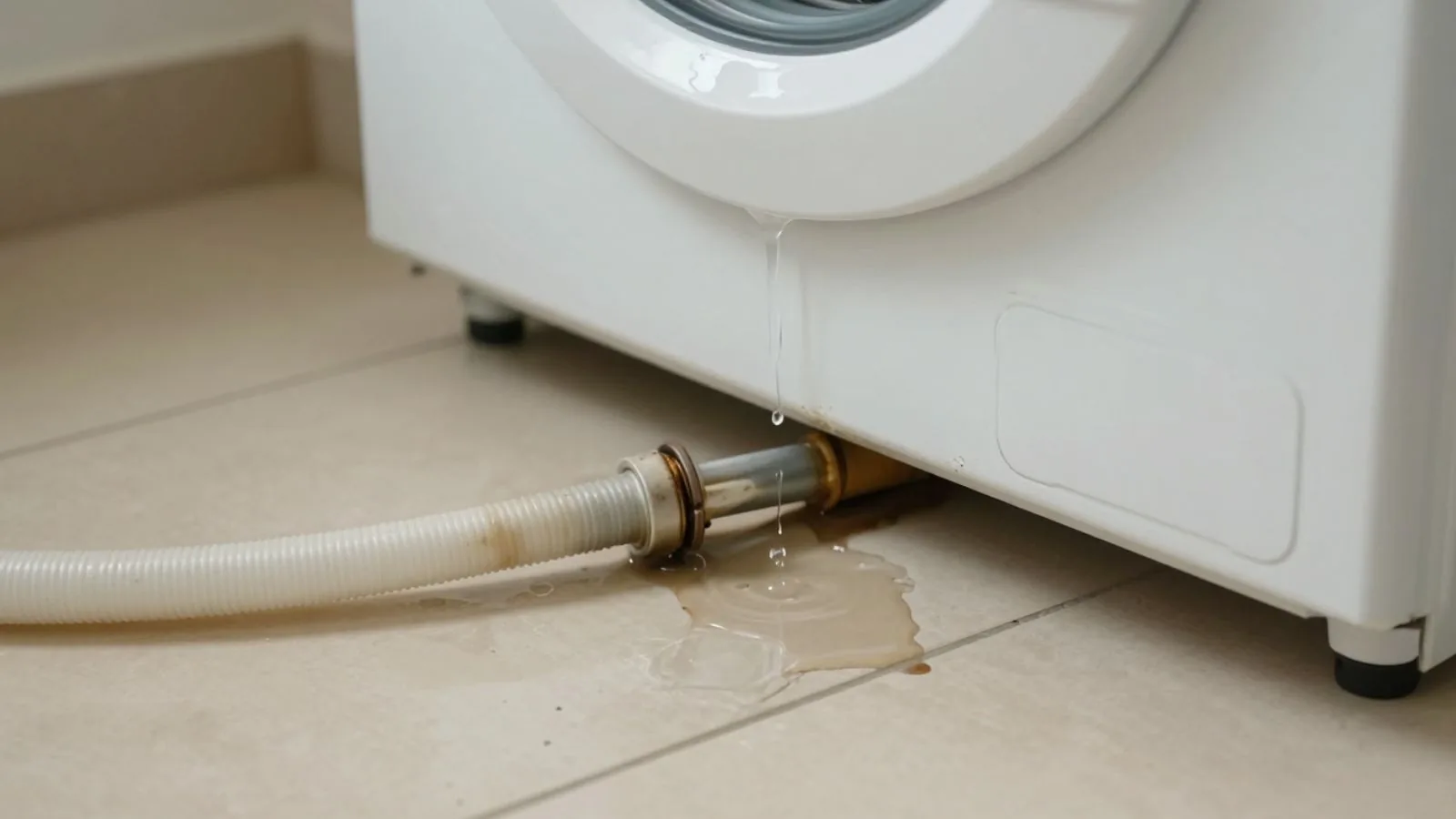
Appliance leaks are quiet. A washing machine hose that weeps behind the unit, a dishwasher gasket that drips into the cabinet base or a refrigerator ice maker line that seeps under the floor can all run for days.
By the time a stain shows on the ceiling below or a floor feels soft, water has usually reached places you cannot see. The cleanup depends on the type of appliance, the type of water and how long it ran.
What to do when an appliance leaks
- Unplug the appliance if the cord and floor are dry, or turn off its breaker.
- Close the valve behind the unit that feeds it, usually a small quarter turn valve.
- Pull the appliance forward only if it is safe, and photograph the wet floor behind it.
Emergency Appliance Leak Response
Stop the water first. Every washing machine, dishwasher and icemaker line has a shutoff valve. Close it, then unplug the unit. If water is pooled near outlets, use the breaker instead.
After shutoff, remove standing water with towels or a wet vacuum while you wait. Move the appliance away from the wall if you can do it without lifting through water. Then call so the crew can check the subfloor and walls.
The ANSI/IICRC S500 standard separates clean supply water from gray water, and that matters here because a washer drain or dishwasher discharge is gray water and changes what can be saved.
Common Appliance Leak Paths
Washing machines
Supply hoses fail at the ends, and rubber hoses age with pressure. A burst hose at full pressure can release gallons a minute. Drain hose issues cause slower overflow that wicks into walls.
Dishwashers
Door gaskets, water inlet valves and drain connections leak into the cabinet base and then into the subfloor. Because the water is hidden, floor swelling is often the first sign.
Refrigerators and ice makers
A small plastic supply line to the ice maker can drip quietly. The water usually collects under the fridge and into the kitchen subfloor, where it grows mold if not dried.
Hidden Water: Why Surface Drying Is Not Enough
A towel can clear the top layer, but it cannot dry the subfloor. Vinyl, laminate and tile trap water below the surface, and cabinets hold it in their base and toe kicks.
A moisture meter shows what the eye misses. Crews often lift a section of toe kick, pull baseboard or drill a small port to dry the cavity. The objective is to dry in place where possible and remove only what cannot recover.
Appliance Leak Causes and Fixes
| Source | Typical cause | Preventive step. |
|---|---|---|
| Washer supply hose | Aged rubber or loose coupling | Replace with braided hose and check yearly. |
| Washer drain | Clog or loose standpipe | Secure the drain hose and clear lint. |
| Dishwasher base | Worn gasket or inlet valve | Inspect under the unit twice a year. |
| Ice maker line | Kinked or cracked tubing | Check behind the fridge when you clean. |
A plumber or appliance technician handles the repair of the appliance or line. Restoration handles the water and the drying.
Kitchen and Laundry Floors Hide Water
A kitchen floor is usually built from subfloor, underlayment and a finished layer. Water that gets under vinyl or laminate stays trapped. The surface may look clean while the subfloor stays wet.
Laundry rooms often sit over a crawl space or a ceiling below. Water that leaks here can show up as a stain in the room underneath. If your washer is upstairs, check the ceiling of the room below after any leak.
Press a flat hand on the floor near the appliance. Soft or spongy spots are a sign of wet subfloor and a reason to call.
Maintenance Habits That Prevent Repeat Leaks
- Replace rubber washer hoses with braided stainless lines.
- Turn off the washer supply valves when you leave for a long trip.
- Pull the dishwasher kick plate off twice a year and look for moisture.
- Check the ice maker line when you clean behind the refrigerator.
- Keep a small water sensor under each appliance.
None of these is complicated, and any one of them can prevent a repeat event.
What Affects the Cost of Appliance Leak Cleanup
Scope and price are explained before work starts. The common factors are listed below.
- How long the leak ran before discovery.
- Floor type, with laminate and hardwood needing more attention.
- Cabinet and wall involvement.
- Rooms below the leak, if any.
- Equipment days for drying.
- Repair of the appliance or line itself, handled separately.
Describe the appliance and the room and we will explain what to expect.
Call (844) 950-6900Appliance Leak Water Damage questions
If water is actively running, yes. If it stopped but the floor is wet, call within the day. Wet subfloor and cabinets can start to deteriorate quickly.
Often not if the leak is caught early. Vinyl and tile can usually be dried in place. Laminate and engineered wood are more likely to swell.
Sudden water release from an appliance is often covered, though wear and tear is not. Policies differ, so check yours.
A fan helps surface drying but not the subfloor or wall. Use meters or call us to confirm that the structure is dry.
Longer leaks lead to more material removal and a higher chance of mold. Call as soon as you find it so a crew can assess the damage.
It depends on how far the water spread, the floor type and drying time. We explain the scope and price before work starts.
Where we dispatch
We serve Middletown, Trenton and Franklin. Related pages cover kitchen water damage and AC leak damage.