
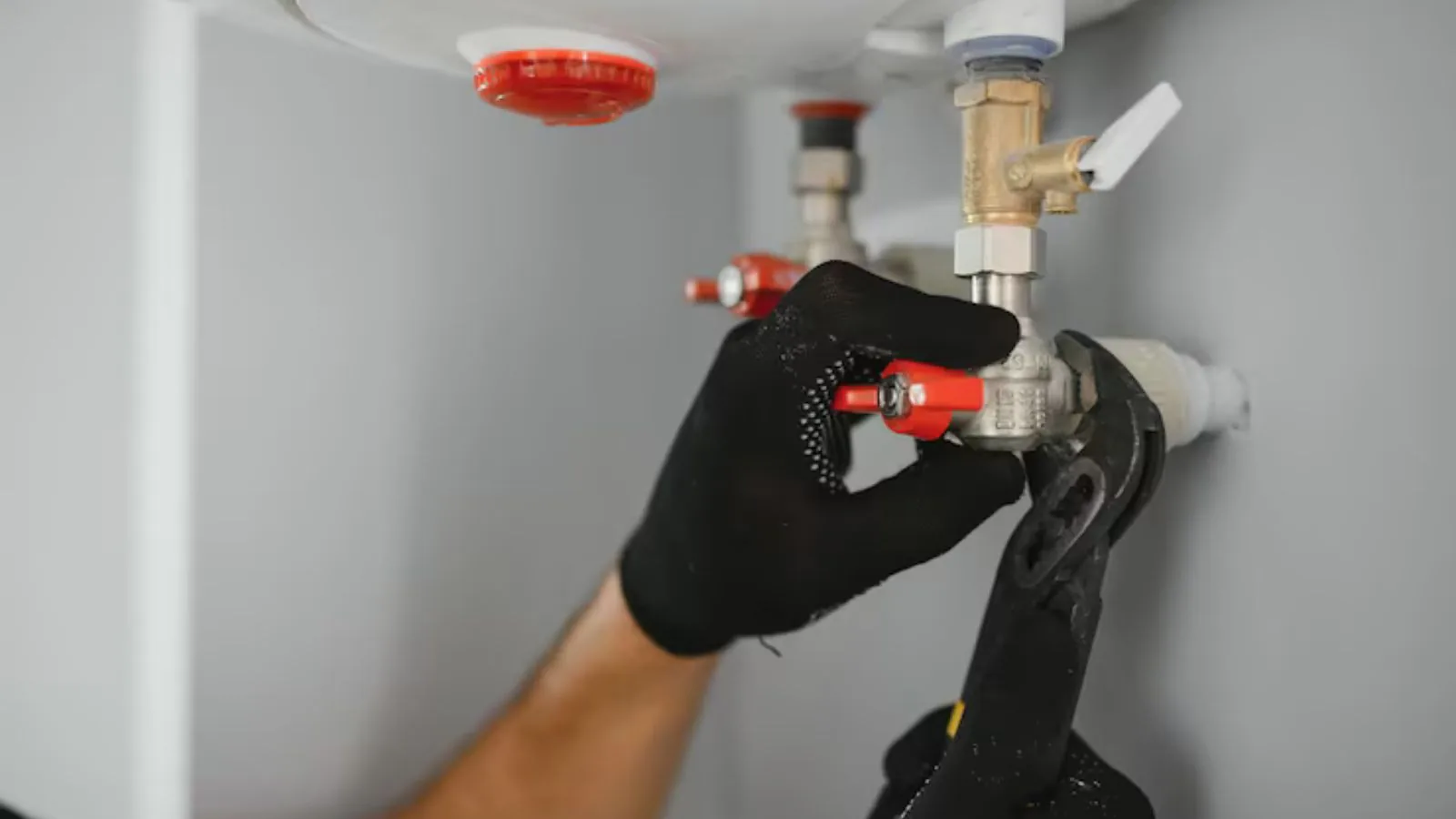
Water heaters fail in two ways. A small fitting leak drips slowly and can run for weeks. A tank failure releases the full contents, which can be forty to eighty gallons, onto the floor in a short time.
Either one soaks nearby walls and stored items, and a heater in a finished basement or closet puts the water where it spreads. The cleanup starts with shutting down the heater and ends with a dry space.
When the water heater is leaking
- Switch off power to an electric unit at the breaker, or set a gas unit to pilot or off.
- Close the cold water supply valve on top of the tank.
- Keep cardboard, rugs and stored boxes out of the water and photograph the area.
Emergency Water Heater Leak: Safe Shutdown First
Turn off the power or gas first, then close the cold water supply. If the leak is heavy, shut the main valve. Do not touch an electric unit if you are standing in water. Use the breaker only when the path to the panel is dry.
Once the heater is isolated, the water is dealt with the way any supply line event is. Extract, map moisture and dry. Call a plumber for the heater itself, since replacement is plumbing work.
ANSI/IICRC S500 describes water category by source and condition, so a clean supply leak from a water heater starts as Category 1 and should be handled before it ages.
Why Utility Room Leaks Spread Quickly
Water heaters sit in closets, garages and basements where floors are slab, plywood or finished carpet. The water moves along the lowest path to a drain, a wall base or a floor seam. It often wicks behind baseboards before you notice.
Drywall at the bottom of the wall absorbs water like a sponge, up to a few inches or more. Cutting a narrow flood cut above the wet line is a common step. It lets air reach the cavity and lets the crew remove wet insulation.
What Gets Wet and What Can Be Saved
| Material | Usually saved | Usually removed. |
|---|---|---|
| Concrete slab | Yes, dried in place | Rarely. |
| Carpet with pad | Sometimes, if clean water and quick action | Pad is commonly replaced. |
| Drywall at base | If dried within a short window | Saturated sections cut out. |
| Stored cardboard | Rarely | Usually discarded. |
| Hardwood or laminate | Depends on exposure time | Swollen planks replaced. |
Photograph items before you move them. A short written list of what was stored there helps later.
Preventing the Next Leak
Tanks wear out. Many last about a decade, though water quality and maintenance change that. Check the base for rust, damp stains or mineral crust around fittings. A drain pan with a line to a drain or a leak sensor can limit damage.
If your heater is older than ten years and sits in a finished space, ask a plumber about replacement before it fails. A planned swap costs far less than a flooded room.
Reading the Signs of a Failing Water Heater
Rust colored water from the hot tap, a rumbling sound when it heats, and puddles at the base all point to a tank near the end of its life. A pooled film around the bottom is the earliest visible sign.
Check the temperature and pressure relief valve discharge pipe. If it drips regularly, the valve or the tank pressure may need attention. A plumber can test it.
Anode rods protect the tank from corrosion and wear out over time. Replacing one on schedule can extend heater life, which is a question for your plumber.
Gas and Electric Safety After a Leak
Never touch an electric heater while standing in water. For gas units, turn the gas control to off and ventilate if you smell gas. Call the gas utility if the smell persists.
After the leak is controlled, the area around the heater should be dry before power or gas is restored. A plumber reinstalls or replaces the unit. We will coordinate timing with your plumber so drying equipment does not block access.
If the heater sits in a closet with a louvered door, take the door off or open it to improve airflow. That helps drying and gives the plumber room to work.
Protecting a Finished Space Around a Heater
A tray under the tank, piped to a floor drain, catches small leaks. A water alarm on the floor warns you early. A leak detector that closes the supply is another upgrade for finished basements.
Store boxes on shelves, not directly on the floor near the tank. Raising items even a few inches keeps cardboard out of a shallow spill.
These small steps cost little compared with replacing a wet closet floor and wall.
What Affects the Cost of Water Heater Leak Cleanup
Scope and price are explained before work starts. These are the items that change the cost.
- Volume of water released and how long it ran.
- Floor and wall materials in the room.
- Whether it spread to adjoining rooms.
- Drying equipment days.
- Flood cut and insulation removal.
- Plumbing replacement, billed separately by a plumber.
Tell us where the heater sits and what the water reached.
Call (844) 950-6900Water Heater Leak Cleanup questions
A tank failure is. Water keeps coming until the supply is closed, and it soaks nearby materials. The emergency line is open at any hour.
A plumber usually handles that when replacing the unit. For cleanup, the priority is closing the supply and extracting what has already spilled.
Sudden tank failures are often covered for the resulting water damage, though the heater itself may not be. Review your policy.
Often yes if it is dried quickly. A moisture meter shows how high the water climbed. Saturated or crumbling sections are cut out.
Small utility room leaks can dry in a few days. Longer leaks and spread into carpeted rooms take more time. The crew confirms with daily readings.
It depends on how much water spread and what it soaked. We explain the scope and price before work starts.
Where we dispatch
We dispatch to Middletown, Trenton and Franklin. Related pages cover appliance leaks and basement water cleanup.