
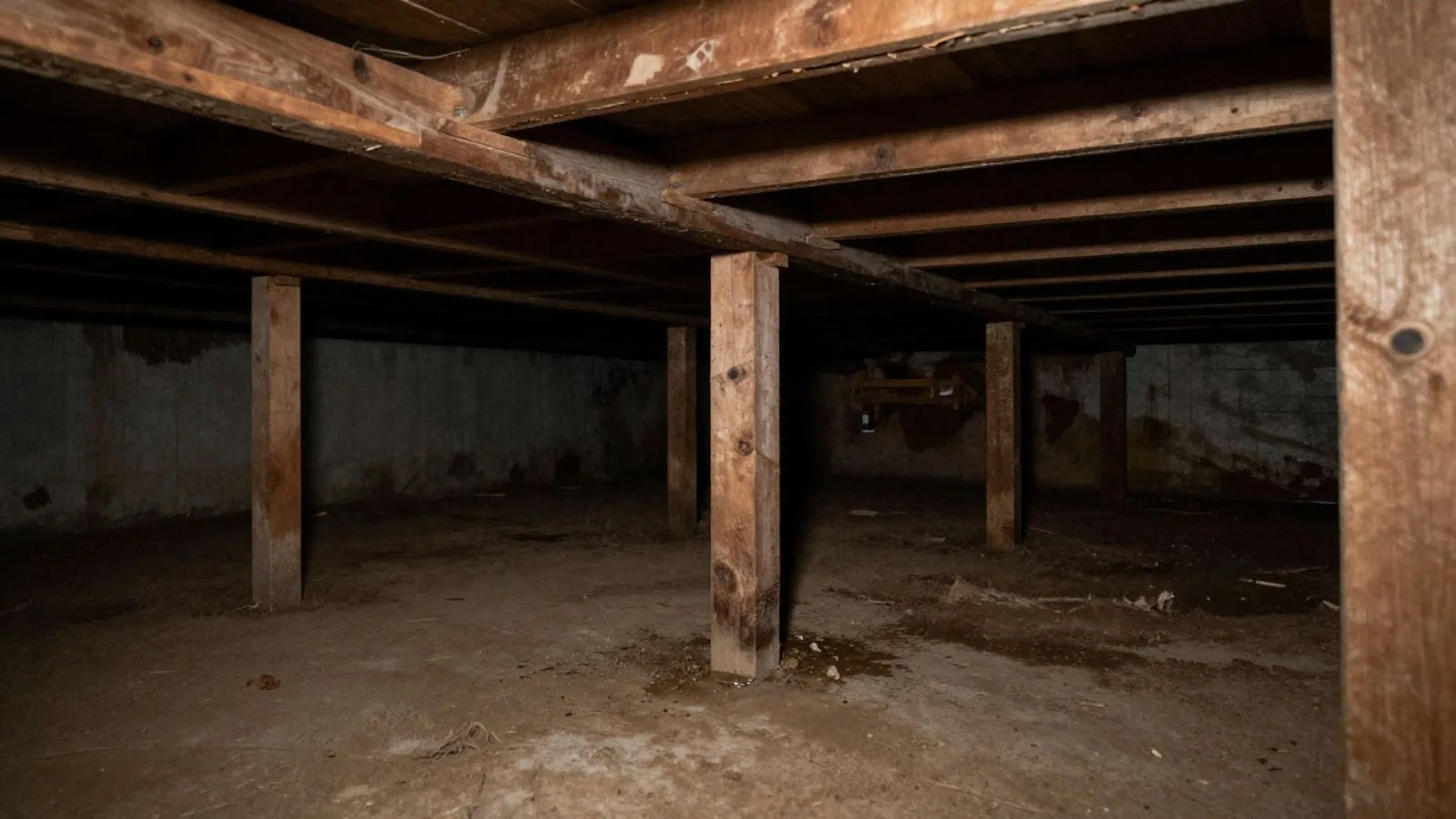
A crawl space is easy to ignore until water gets in. It sits under your floors, holds wiring, ducts and plumbing, and its condition affects the whole house above.
Water enters from outside after heavy rain, from a leaking supply or drain line, or from groundwater. Whatever the source, it soaks insulation, wets joists and raises humidity that can reach your living space.
When there is water in the crawl space
- Do not enter if water is deep or near wiring, and keep children and pets out.
- Shut off power to the crawl space circuit if the breaker is dry and reachable.
- Photograph the water line on piers and foundation walls, and note any musty smell indoors.
Signs of Crawl Space Water Problems
Floors that feel cold or soft, musty odors that increase on humid days and sagging insulation hanging from the subfloor are common signs. Condensation on ducts and pipes points to high humidity.
Look at the foundation wall. Water lines, white mineral crust or dark stains show where moisture arrived. Visible mold on joists or the subfloor means the problem has existed for a while.
The ANSI/IICRC S500 standard calls for moisture mapping of structural wood, which is why we read joists and subfloor rather than judging a crawl space by smell alone.
How Water Gets Under a House
Surface drainage
Gutters that dump at the foundation and soil that slopes toward the house send rain toward vents and wall seams. After a heavy storm, water can pond along one wall.
Plumbing leaks
A slow supply leak or a drain leak under a bathroom drips into the crawl space for months. The first sign is often a musty smell inside the home.
Groundwater
In river valley areas with a higher water table, water can rise through the soil. Sump pumps in crawl spaces fail like those in basements and need power and a working discharge line.
What a Crawl Space Cleanup Includes
A crew removes standing water with a pump, then extracts the remaining film. Wet insulation is pulled out because it holds water against the subfloor and joists. Moisture meters check the wood, and a thermal camera shows trouble spots through the subfloor.
Dehumidifiers and air movers dry the space once the water is out. Vapor barrier problems and standing soil moisture are noted, since drying only works when new water stays out.
Crawl space cleanup checklist
- Pump out standing water.
- Remove wet insulation and debris.
- Take moisture readings on joists and subfloor.
- Run dehumidifiers and air movers.
- Note drainage and vapor barrier concerns for repair.
- Document readings and photos.
Fix the Water, Then Fix the Cause
| Source | What helps | Who handles it. |
|---|---|---|
| Surface runoff | Extend downspouts, regrade soil | Landscaper or contractor. |
| Plumbing leak | Repair line or fitting | Plumber. |
| High groundwater | Sump pump or drain system | Foundation or waterproofing pro. |
| Condensation | Vapor barrier and dehumidification | Crawl space specialist. |
We dry the structure and tell you what we see. Long term fixes are outside restoration, and we point you to the right trade.
Why Crawl Space Moisture Reaches Your Living Area
Air moves from low to high in a house. A damp crawl space sends humid air up through gaps around pipes, ducts and floor edges. That air raises indoor humidity and carries odors with it.
Wood framing absorbs that moisture. Joists and subfloor swell, nails loosen and floors start to feel soft. In time, fungal growth can weaken wood. Early drying prevents that path.
Water Table and River Valley Soils
Many Middletown neighborhoods sit close to the Great Miami River, where groundwater can rise after long wet periods. Crawl spaces in those areas see more seasonal moisture than houses on higher ground.
A sump pump with a working discharge line and a sealed vapor barrier on the soil reduce the load. If you already have a pump, test it by pouring water into the pit before the wet season starts.
What Affects the Cost of Crawl Space Water Damage Cleanup
Scope and price are explained before work starts. The main factors are below.
- Water depth and extent.
- Access, including how tight the space is.
- Insulation removal.
- Drying equipment days.
- Mold presence and containment needs.
- Repairs to the source, handled separately.
Tell us about the access hatch and what you see inside.
Call (844) 950-6900Insurance and Records
Policies often cover sudden water events and exclude seepage and groundwater. Ask your agent what yours says. We provide photos and moisture logs to support whatever claim you choose to file.
Crawl Space Water Damage questions
Yes. Moisture rises into subfloor and joists and can warp flooring above. Mold and odor also travel into the living space.
Usually yes if it is wet. Wet insulation holds water against the wood and does not dry well. Dry sections can often stay.
Active leaks and deep water are. Call the same day. A damp but stable crawl space is less urgent but should still be checked.
It depends on water depth, access and drying time. We explain the scope and price before work starts.
It depends on the source. Sudden pipe failures are often covered, and groundwater or seepage often is not. Check your policy.
Where we dispatch
We serve Middletown, Trenton and Franklin. For related causes see frozen pipes and basement water.