
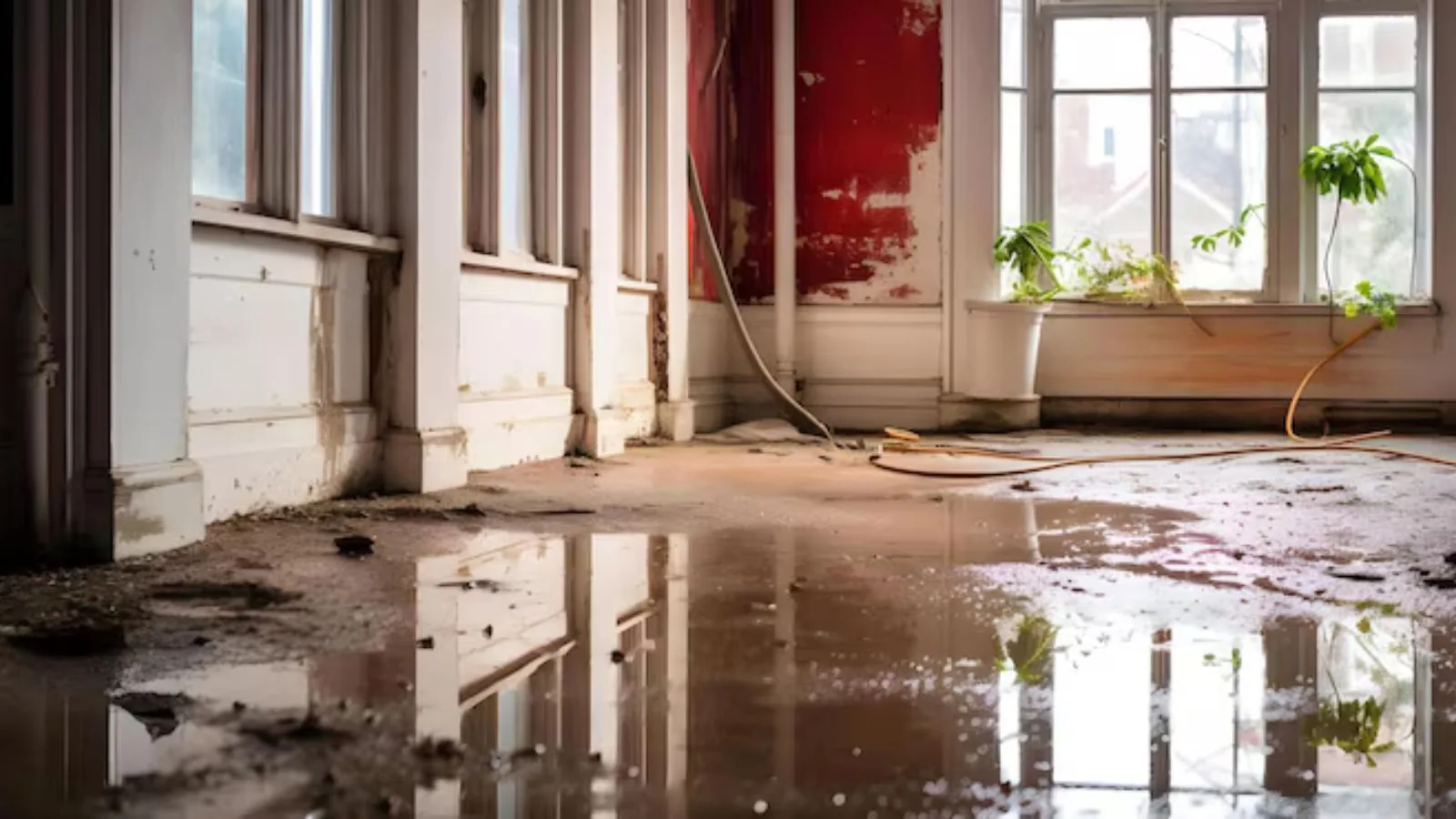
Floodwater picks up soil, fuel, fertilizer and sewage as it moves across the ground. Once it enters a home, it is treated as contaminated water, even if it looks muddy rather than foul.
Middletown sits on the Great Miami River, and river valleys carry a real history of flooding. After the 1913 floods, the Miami Conservancy District built dry dams upstream to protect cities like this one. Those dams do not stop every local water event, and heavy rain can still overwhelm drains, basements and low yards.
Before you enter a flooded space
- Stay out if water is near outlets, appliances or the panel, and turn power off only if the panel is dry and reachable.
- Wear boots and gloves if you must enter, and keep children and pets away from the water.
- Photograph the water line and damaged items, then call the 24/7 line.
Emergency Flood Damage Cleanup: The Sequence
Safety comes first. Crews check for electrical hazards, structural damage and gas smells before work starts. Contaminated water means protective gear and controlled work areas.
Next comes water removal. Pumps clear deep water, extractors handle floors, and wet vacuums finish edges. Soaked carpet pad, insulation and low drywall are often removed because they hold contaminants.
After removal, surfaces are cleaned and treated, then dried with air movers and dehumidifiers. Final readings confirm the structure is dry before rebuild begins.
The ANSI/IICRC S500 standard classes floodwater and river water as Category 3, and that is the reason carpet, pad and low drywall are usually removed rather than cleaned.
Water Categories and What They Mean
| Category | Typical source | Handling. |
|---|---|---|
| Category 1 | Broken supply line or clean rainfall indoors | Extraction and drying, most materials can stay. |
| Category 2 | Washing machine overflow or aged clean water | Extraction, cleaning and removal of porous items. |
| Category 3 | Floodwater, sewage or river water | Protective gear, removal of porous materials, disinfection. |
Floodwater is generally treated as Category 3. That does not mean the house is a loss. It means porous materials such as carpet and pad usually come out, while structural wood can be cleaned and dried.
Flood Risk in the Great Miami River Corridor
Homes near the river, in low lots or below street grade deal with water differently. A basement may take water through floor drains, wall cracks or window wells long before the street floods. Knowing whether your address is in a mapped flood zone is worth the few minutes it takes.
The FEMA flood map service lets you look up an address. Standard homeowners policies generally exclude flood, so many owners in river areas buy separate flood coverage. Ask your agent what yours includes before the next storm.
Contents, Documents and Photos After a Flood
Move what you can to dry, elevated areas, starting with documents, photos and electronics. Do not run wet electronics. Hard goods like dishes and tools can usually be cleaned. Soft goods like mattresses and upholstered furniture touched by floodwater are often discarded.
Keep a list as you go. Write down what was lost, its approximate age and where it was in the house. A clear list makes insurance conversations easier.
Safety Notes for Flooded Homes
Electricity and water do not mix. If water reached outlets, appliances or the panel, wait for a qualified electrician before restoring power. Do not use a gas appliance that was in water until it has been inspected.
Floodwater can hide sharp debris, broken glass and slick mud. Wear sturdy boots and gloves. Keep children and pets out of the area until cleanup is complete.
Do not mix household cleaners, since some combinations release harmful fumes. Plain soap and water is a safe first step for hard surfaces while you wait for the crew.
What Recovery Looks Like Over the First Week
- Day one covers safety checks, extraction and removal of porous materials that cannot be saved.
- Days two to four focus on controlled drying with air movers and dehumidifiers, plus daily meter checks.
- Day five onward confirms dry readings, cleans surfaces and prepares a rebuild scope.
- Rebuild begins only after the structure meets drying goals.
Timelines shift with depth, materials and weather. Each step is logged so you and your adjuster can see progress.
What Affects the Cost of Flood Cleanup
Scope and price are explained before work starts. The main variables are below.
- Depth and duration of the water.
- Water category and contamination level.
- Square footage of affected rooms.
- Materials removed such as carpet, pad and drywall.
- Equipment and monitoring days.
- Whether the structure also needs mold prevention steps.
Call with the depth and location of the water and we will outline the cleanup plan.
Call (844) 950-6900Flood Damage Cleanup questions
Yes. The line is open around the clock. Same-day response is offered when available, and the dispatcher can give you safety steps while a crew is arranged.
It should be treated that way. Rain runoff and river water carry soil and bacteria. Protective steps and cleaning are part of the job.
Standard policies commonly exclude flood and cover sudden internal plumbing losses. Flood coverage is usually a separate policy. Check your declarations page or ask your agent.
Usually not. Carpet and pad that sat in floodwater are typically discarded because they hold contaminants. Hard flooring can often be cleaned and dried.
Mold can begin to grow when materials stay damp for a few days. Fast extraction and drying are the best prevention.
It depends on depth, contamination, materials and drying time. We explain the scope and price before work starts.
Where we dispatch
We serve Middletown, Trenton and Franklin and surrounding river valley neighborhoods. For below grade rooms see basement water damage, and for storm related roof and wind water see storm water damage.