
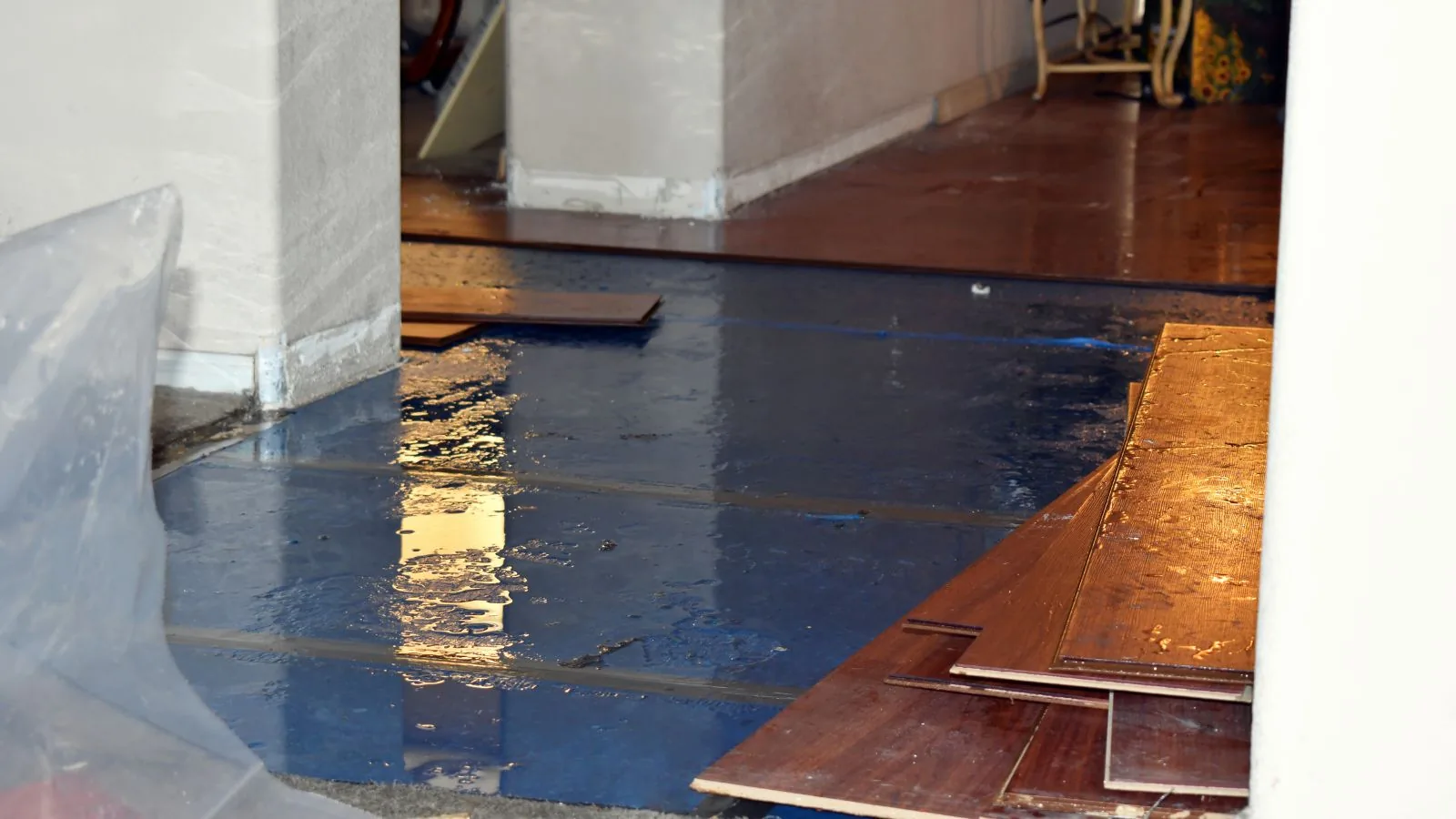
A slab leak is a break in a water line that runs under or inside a concrete foundation. The water has nowhere to go but up and out, so it finds its way through cracks, joints and the edges of the slab.
This kind of damage is quiet at first and then expensive. Fixing the pipe belongs to a plumber. Dealing with the water that has soaked flooring, drywall and cabinets belongs to restoration, and both need to be done.
If you suspect a slab leak
- Shut off the main water valve and watch the meter to see if it still moves.
- Move rugs and furniture off any warm, damp or buckled floor area.
- Photograph baseboards, cracks and floor transitions that look wet.
Floor Feels Warm or Damp, but You Cannot See a Leak?
A warm spot on the floor, a sound of running water when no tap is on and a water bill that rose without explanation are common signs of a slab leak. Water in the pipe may be hot, which can warm the slab above it.
Water that moves under the floor needs a trade that maps moisture, extracts what it can and dries the structure. That trade is water mitigation, and this page explains how it works after your plumber confirms the leak.
The ANSI/IICRC S500 standard puts dense materials such as concrete and hardwood in its specialty drying class, so slab drying follows daily readings instead of a fixed number of days.
How Slab Leaks Damage a House
Flooring
Wood, laminate and vinyl plank react first. Boards cup or lift where moisture arrives from below, and glued flooring can release from the slab. Tile can crack when the slab shifts or when grout fails.
Walls and cabinets
Water wicks from the floor into drywall and the bottom of cabinets. The paper face of drywall feeds mold if it stays wet.
The slab itself
Concrete holds water and releases it slowly. A leak can saturate soil beneath the slab as well, which leads to settling in rare cases. This is one reason repairs should not wait.
Between the Plumber's Fix and the Rebuild
After a leak is located and repaired, there is a gap. The floor is wet, the walls are damp and the slab has absorbed water. This gap is where drying happens. If it is skipped, mold and odor can show up months later.
The sequence is usually extraction, moisture mapping, removal of ruined flooring, controlled drying and then readings that show when the building is dry enough for new flooring.
- Plumber confirms the leak and repairs or reroutes the line.
- Crew extracts water and removes wet baseboard and flooring that cannot recover.
- Air movers, floor drying mats and dehumidifiers run on a plan.
- Daily readings track the slab and walls.
- A written record supports your claim and the rebuild.
Cost Drivers for Slab Leak Cleanup
Scope and price are explained before work starts. These items matter most.
- How long the leak ran before discovery.
- Square footage of flooring affected.
- Flooring type and whether it is glued down.
- Wall and cabinet involvement.
- Equipment days, which can run longer on concrete.
- Plumbing repair, which is a separate scope.
Describe the signs you have seen and when you first noticed them.
Call (844) 950-6900Emergency Slab Leak Steps for Homeowners
Treat suspected slab leaks as an emergency. Close the main valve, keep the meter in view and note whether it stops moving. If it does, the leak is inside the house line. If it does not stop, the leak may be between the meter and the main.
Call a plumber with leak detection tools. Most use acoustic equipment or thermal imaging to find the break. Ask about repair options, such as opening the slab, rerouting overhead or lining the pipe. Each has pros and cons that depend on the home.
Tell us what the plumber finds so we can plan around access and timing.
Insurance and Documentation
Policies treat slab leaks differently. Some cover sudden damage and exclude gradual leaks, and some limit coverage for the pipe itself. Read your policy carefully.
Keep the plumber's report, photos of the leak, your water bills and our moisture records. Together they show what happened and when.
Why Slab Leaks Take Longer to Dry
Concrete is porous. It absorbs water and gives it back slowly, which means a slab can stay damp for weeks if drying is not managed. Floor drying mats, injection ports and dehumidifiers pull the moisture from the slab.
Putting new flooring over a damp slab is a common cause of repeat problems. Boards cup, glue fails and odors return. A moisture test on the slab before new floor goes in is worth the time.
Preparing for the Plumber's Visit
Clear access to the suspected area. Move furniture and rugs back from the wall and note where floors feel warm. Tell the plumber about any sounds, bill changes and the date you first noticed them.
Ask whether the repair needs the slab opened. If it does, plan for dust, noise and a temporary move of items. Tell us the plan so we can schedule drying around the repair.
Slab Leak Water Damage questions
Yes. A pressurized line can keep feeding the slab and soil, and flooring can fail quickly. The emergency line is open around the clock.
Close the main valve and check whether the meter keeps moving. Then call a plumber for leak detection. Call us if the floor, baseboards or walls look wet.
Sometimes, if it is caught early and lifted to dry. Glued floors often need replacement. A moisture check shows what is recoverable.
It depends on how far the water traveled and what it soaked. We outline the scope and price before work starts so you know what to expect.
Coverage depends on the policy. Many cover sudden water damage but not the cost of reaching the pipe. Review your policy or ask your agent.
Where we dispatch
We serve Middletown, Trenton and Franklin. For related causes see burst pipes and structural drying.