
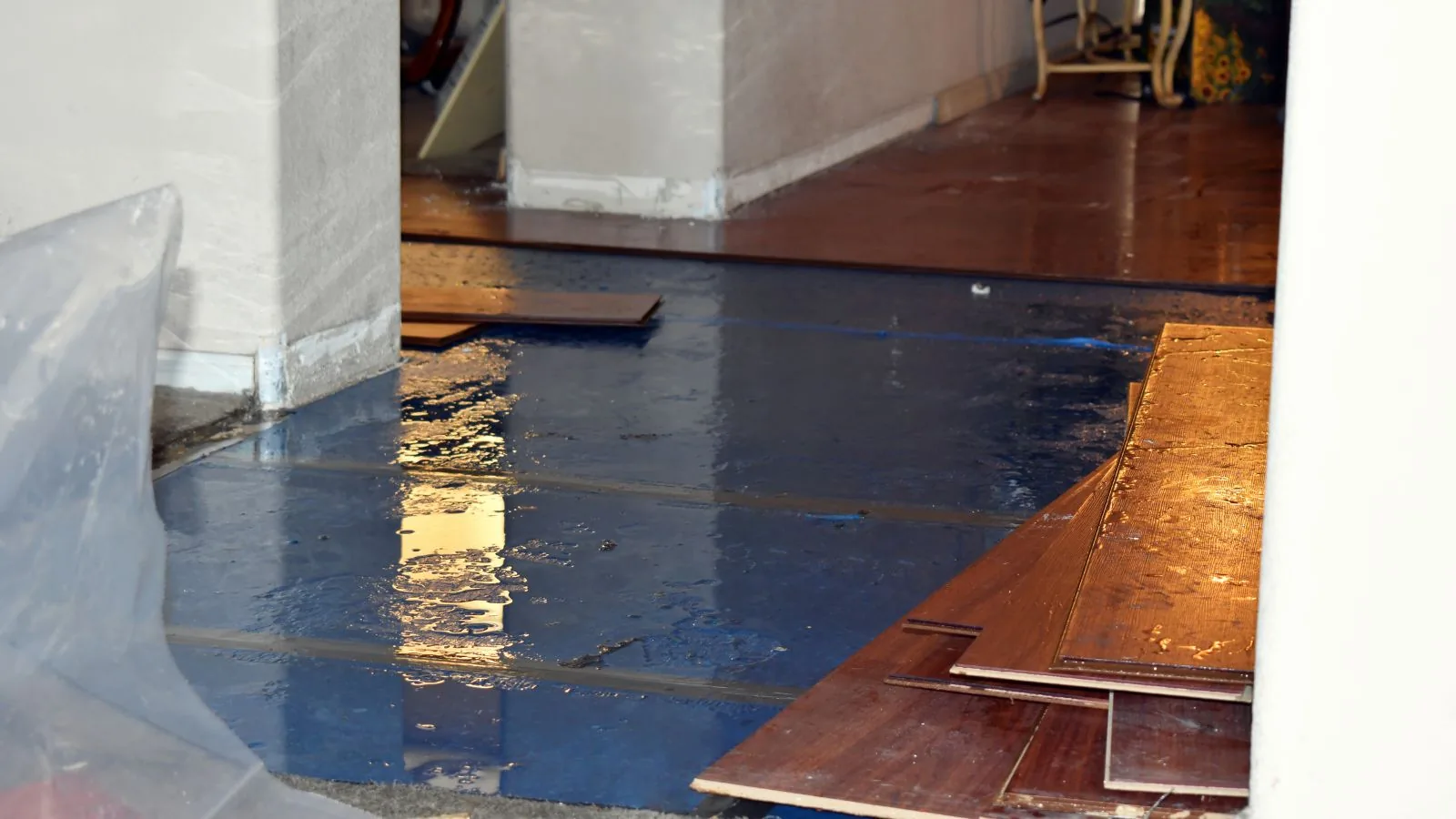
Not every leak announces itself. Some run inside walls, under floors or in slabs for weeks. The first sign is often a bill that goes up, a smell that does not go away or a stain that appears from nowhere.
You can do a few safe checks yourself. If they point to a leak you cannot reach, a plumber with detection tools can find it without tearing the house apart.
The Water Meter Test
Turn off every fixture and appliance inside the house. Find your water meter and look at the small leak indicator, often a triangle or dial. If it moves while nothing is running, water is escaping somewhere.
For a more precise test, write down the meter reading, wait an hour without using water and check again. A change means a leak. If the number stays the same, the leak may be intermittent.
Once a leak is found, the ANSI/IICRC S500 standard guides how the wet area is mapped and dried, so the plumber's repair is only half of the fix.
Toilets: The Most Common Culprit
A toilet that runs or leaks into the bowl wastes water without making a mess. Add a few drops of food coloring to the tank. If color appears in the bowl without flushing, the flapper is leaking.
Toilet supply lines and wax rings can also leak onto the floor. Check for soft flooring around the base and for stains on the ceiling below.
Clues Around the House
| Place | What to check | Possible meaning. |
|---|---|---|
| Under sinks | Dampness, rust, swollen cabinet floor | Supply or drain leak. |
| Around the water heater | Rust, pooling, wet insulation | Fitting or tank leak. |
| Ceilings below bathrooms | Stains or sagging | Shower pan, tub or toilet leak. |
| Floors | Warm spots, cupping, soft areas | Slab or subfloor leak. |
| Exterior walls | Cold damp spots | Frozen or leaking supply line. |
| Yard | Soggy spots with no rain | Service line leak. |
Found a wet spot? Call and describe where.
Call (844) 950-6900Sounds, Smells and Bills
A hissing or trickling sound in a wall, a drop in water pressure and a musty smell are all clues. A bill that rises with no change in use is another. Compare several months to see the trend.
Check outdoor spigots and irrigation systems too. A stuck valve can run all night.
When to Call a Professional
Call a plumber if the meter moves and you cannot find the cause. Leak detection uses acoustic tools and thermal imaging to locate leaks without opening walls.
Call restoration if you find wet materials. Moisture meters and thermal cameras show how far the water has spread.
- Do the meter test.
- Check toilets and fixtures.
- Inspect under sinks and around appliances.
- Check ceilings and floors for stains and soft spots.
- Call a plumber for detection.
- Call restoration if materials are wet.
Mold and Odor Clues
A hidden leak can feed mold in a wall or ceiling. A musty smell with no visible source is a reason to look. Do not cut into walls randomly. Mapping with a meter finds the wet area with minimal damage.
Photograph anything you find. Photos help plumbers, restorers and insurers understand the situation.
Using Your Water Bill as a Clue
Look at the last six months of bills. A steady rise with no change in household use points to a leak. A sudden spike points to a break. Compare winter and summer use, since irrigation and filling a pool change the picture.
Your water utility may be able to confirm unusual use on your account. Ask whether they offer leak alerts or smart meter data. Some utilities send notices when use stays high overnight.
Write down the date the increase started. It helps your plumber narrow down the cause.
Outdoor and Service Line Leaks
A leak between the meter and the house is easy to miss. Look for soggy patches in the lawn, a section of yard that stays green in a dry spell and the sound of running water near the foundation.
Service line repairs involve digging, and responsibility for the line depends on where it sits. Ask your utility where the line ownership changes. Then call a plumber or excavator for the part you own.
| Sign | What it may mean. |
|---|---|
| Wet lawn patch with no rain | Service line or irrigation leak. |
| Meter moves with all fixtures off | Leak after the meter. |
| Low water pressure | Leak or partial blockage. |
| Sinkhole or soft ground near foundation | Larger line break, call right away. |
What Happens After You Find the Leak
Close the valve that feeds the leak. Take photos, then call a plumber. Ask whether the plumber sees wet materials. If they do, call a restoration crew for extraction and drying while the plumber works.
Do not close up any wall or ceiling that was opened until the area reads dry. Closing too soon traps moisture and brings the problem back.
Recap: Work From Easy to Hard
Start with the meter test, then toilets, then the fixtures under sinks and the appliances. Move on to ceilings, floors and outdoor lines. If you reach the end of the list and the meter still moves, call a plumber with detection tools.
Finding a leak early is cheaper than finding it after a floor fails. Do the simple checks at least twice a year.
Middletown Note: Meters, Freeze Breaks and Winter Leaks
In winter, a pipe that splits during a freeze may not leak until it thaws. If you notice a drop in pressure or a sound of running water after a cold snap in Middletown, run the meter test right away. Closing the main valve limits damage while you wait for a plumber.
Homes with crawl spaces or unheated basements are prone to hidden leaks. A flashlight check of exposed pipes in the fall can catch drips before the cold weather arrives.
Questions about this topic
Do the meter test with all fixtures off. Look for stains, soft spots, musty smells and rising bills.
Yes. Water soaks insulation, drywall and framing and can feed mold.
Coverage varies. Sudden leaks are more often covered than slow ones. Review your policy.
Moisture meters, thermal cameras and acoustic detectors help locate leaks without opening large areas.
They can be after hard cold snaps. Check the meter and exposed pipes when temperatures rise.
Next steps in Middletown
If you find wet materials, see burst pipe cleanup, slab leaks and frozen pipe damage. We serve Middletown, Trenton and Franklin.
If water is still in the house, call (844) 950-6900 any hour of the day or night.