
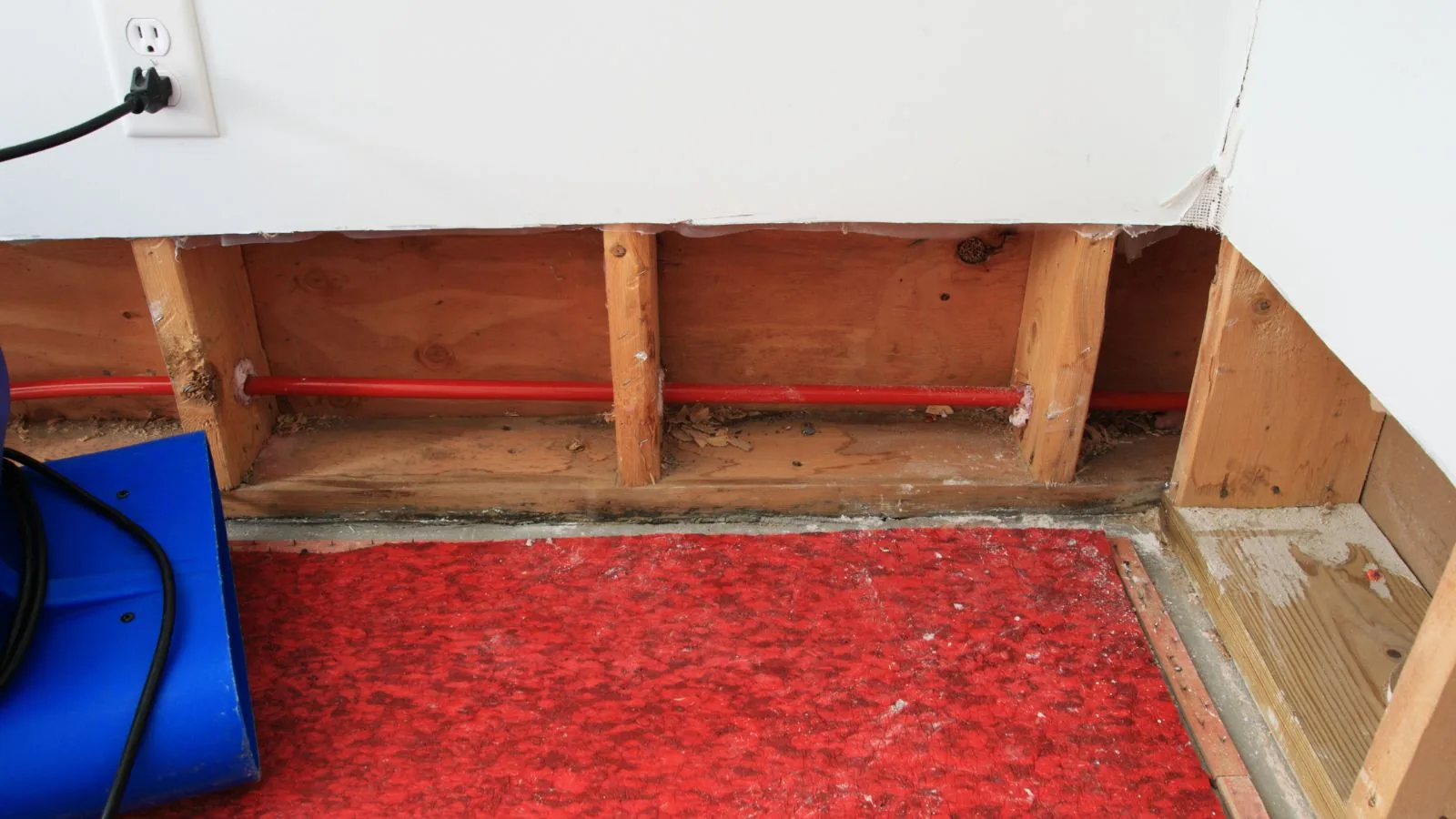
Buying a house, renting a unit or finding a stain after a storm all raise the same question. Is this old damage or a current problem? The answer affects repair plans, insurance and safety.
No single sign settles it. A mix of clues and a moisture meter reading give the best picture. This guide covers what to look for and what to do next.
Clues in Color and Shape
New stains often look dark and wet. They may have a soft edge that spreads over time. Old stains are usually dry, with a clear brown ring at the edge where minerals dried. Multiple rings suggest repeated wetting.
A stain that changes after rain or after running a sink points to an active source. Mark the edge with a pencil and check again in a day or two.
Professionals use readings against a dry baseline, a method described in ANSI/IICRC S500, to separate a past stain from an active leak.
Texture and Sound
Press gently on the area. Soft, spongy drywall means moisture remains or the material has weakened. Crumbling plaster and powdery residue point to long term damage. Warped baseboards and cupped flooring show repeated wetting.
Tap the wall. A hollow sound can mean the board has separated or the cavity is damp.
Smell and Mold Signs
A musty odor suggests lingering moisture. It does not prove old damage, because a recent leak in a closed space can smell within days. Dark spotting that returns after cleaning points to a continuing source.
Do not scrub suspected mold dry. Disturbing it spreads spores. Photograph it and call a professional.
| Clue | More likely new | More likely old. |
|---|---|---|
| Stain edge | Soft and spreading | Sharp ring, dry. |
| Surface | Damp or cool | Dry and brittle. |
| Smell | Fresh dampness | Stale mustiness. |
| Paint | Fresh bubbling | Peeled or flaking. |
| Meter reading | Above baseline | At baseline. |
Stain with no clear source? Ask about a moisture check.
Call (844) 950-6900The Moisture Meter Settles It
A moisture meter measures water content in drywall and wood. Compare readings in the stained area with a dry area in the same room. If the stained area reads high, it is wet. If it reads normal, the damage may be old.
A thermal camera adds context by showing cool spots that suggest evaporation. Together they help decide whether a leak is active.
Readings can change with humidity, so repeat them over a day or two for a clear picture.
What to Do With Each Answer
- Active leak: stop the source, call a plumber or roofer and start drying.
- Old damage that is dry: repair finishes and fix the cause.
- Unknown: monitor readings and recheck after rain or fixture use.
- Mold present: contain, document and call a professional.
Even dry, old damage can hide rot or mold. If you are buying a home, ask for a moisture inspection and pay attention to the history.
If You Are Buying or Renting
Ask the seller or landlord about past leaks and repairs. Request documents for any work done. Check ceilings under bathrooms, walls around windows and floors near appliances.
A fresh coat of paint on one patch can be a sign that a stain was covered. A meter can see through paint.
Do not rely on a quick visual check. A moisture reading is cheap and clear.
Documenting Damage You Find
Photograph stains with a ruler or coin in the frame so the size is clear. Take a wide shot of the room and a close shot of each stain. Note the date, the weather and whether any fixtures were running.
If you are renting, send the photos to your landlord in writing. If you own the home, keep them with your records. A dated photo of a stain is useful evidence of when it first appeared.
Repeat the photos a week later. Changes between the two sets show whether the area is active.
What a Moisture Survey Includes
- Readings at the stain, around it and in a dry reference area.
- Thermal imaging of the wall, ceiling or floor.
- Checks of fixtures, roof penetrations and appliances nearby.
- A written note of readings and conditions.
- A recommendation on whether drying, repair or monitoring is needed.
A survey does not tear into walls. It tells you whether tearing into them is necessary.
Old Damage and Mold Concerns
Dry, old water damage is usually not a health risk by itself. The concern is what it hid. A past leak may have left rot in framing, mold in a cavity or corroded wiring. If the area is solid and dry, it is usually fine to repair the finish and move on.
If a stain keeps returning, there is a source still feeding it. Treat it as an active problem until the readings say otherwise.
Recap: Three Checks to Remember
Look at the edge of the stain, press on the surface and take a meter reading. If the edge is soft, the surface gives and the meter reads high, the damage is likely active. If all three are normal, the stain is probably old, but keep an eye on it after the next rain.
Fix the cause before you fix the finish. Paint over a leaking pipe is only a matter of time.
Middletown Note: Reading Stains in Older Homes
Middletown has many older homes, including houses in older neighborhoods near downtown with plaster walls and decades of repairs. Stains in plaster behave differently from drywall and can reappear after repainting if the source was never fixed. In those homes, a moisture reading matters more than a visual impression.
If you are looking at an older house near the river, check basement walls for mineral lines and efflorescence. Those marks show where water has come through before. Ask about sump pumps and drainage when you tour the house.
Questions about this topic
Mark the edge and check again after rain or fixture use. A moisture meter reading above normal means the area is wet.
It can hide rot or mold. If the area is dry and solid, the risk is lower. A professional check settles it.
It can hide the stain, not the moisture. A meter reads through paint.
Brown rings show water passed through. Find the source and check readings.
Yes. Plaster hides moisture in different ways. Meter readings are the best guide.
Next steps in Middletown
If the area is wet, see ceiling water damage, wall and drywall repair and structural drying. We serve Middletown, Trenton and Franklin.
If water is still in the house, call (844) 950-6900 any hour of the day or night.