
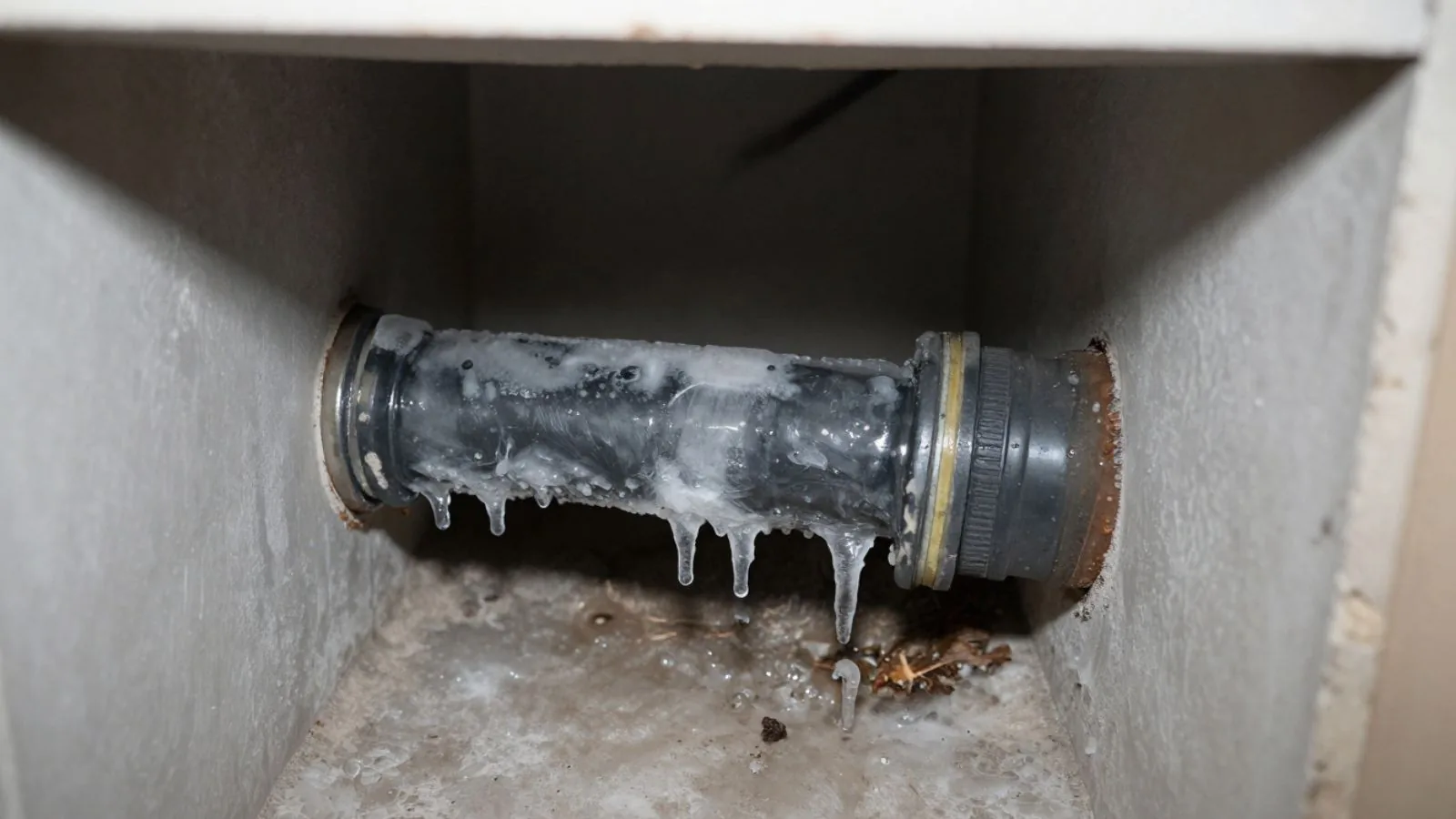
Water damage while you are away is the worst kind, because no one is there to stop it. A small supply line failure on day one can become a flooded house by day seven.
This guide is a checklist you can follow before a trip, a winter stay elsewhere or a long period of vacancy. None of it is complicated, and each step lowers risk.
Shut Off the Water
The simplest protection is to close the main valve before a long trip. With the main closed, a failed hose or pipe cannot keep releasing water. Open a faucet to drain pressure and leave it open if the house will be unheated.
If you cannot shut off the whole house, close individual valves for the washing machine, dishwasher and ice maker. Those lines are common failure points.
ANSI/IICRC S500 stresses fast control of the source, which is exactly what a shutoff valve and a leak sensor give you in an empty house.
Heat and Winter Settings
If you leave in cold months, keep the heat on at a level that protects pipes. Open cabinet doors on exterior walls so warm air reaches plumbing. Disconnect outdoor hoses and shut off outdoor valves.
Consider a smart thermostat that alerts you if the temperature drops. A cold house is the first warning of a heating failure that could freeze pipes.
Pre-departure checklist
- Close the main water valve or key appliance valves.
- Set the heat to a safe minimum in winter.
- Check the water heater and consider turning it to vacation mode.
- Test the sump pump and clear the pit.
- Clean gutters and extend downspouts.
- Ask someone to check the house on a schedule.
Appliances and Fixtures
Replace rubber hoses on washing machines with braided stainless lines. Check the dishwasher and ice maker lines. Turn off the water heater or set it to vacation mode so it does not heat an empty tank.
Fix drips before you leave. A small leak that you could ignore for a day becomes a bigger problem over a week.
| Item | Risk | Protection. |
|---|---|---|
| Washer hoses | Burst under pressure | Braided lines, close valves. |
| Water heater | Tank failure | Inspect, vacation mode. |
| Ice maker line | Slow leak | Close valve if unused. |
| Sump pump | Power or float failure | Test and add backup. |
| Roof and gutters | Overflow, leaks | Clean and inspect. |
Came home to water? Shut off the main and call.
Call (844) 950-6900Sensors and Smart Shutoffs
Leak sensors cost little and alert you by phone when they sense water. Place them under sinks, near the water heater, behind the washer and by the sump pit. An automatic shutoff valve on the main line adds protection by closing when it detects unusual flow.
Check batteries before every trip. A dead sensor is no protection.
Ask Someone to Check
A neighbor, friend or property manager can walk through the house every few days. Give them a short list: check for water, check the temperature and test the sump pump. Provide the number for the water shutoff and for emergency help.
If you manage a rental or a vacant property, schedule regular checks and record them.
If You Come Home to Water
Shut off the main valve, avoid wet electrical areas and photograph the damage. Call the 24/7 line. Early action limits spread and helps your insurance claim.
Do not wait to see if it dries. Water that has been in a house for days needs professional extraction and drying.
A Simple Monthly Habit for Everyone
Once a month, spend five minutes looking at the places where water hides. Check under each sink, behind the toilet, around the water heater and at the washing machine hoses. Look for drips, rust and soft spots. Run your hand along the pipe and see whether it feels damp.
Make a note on your phone of the date. A written habit catches problems early. Add checking the sump pit and gutters in spring and fall.
Five minute monthly water check
- Look under every sink for moisture.
- Inspect washing machine hoses and the shutoff valves.
- Look at the base of the water heater for rust or puddles.
- Press the ceiling under bathrooms for soft spots.
- Check the sump pit and the discharge outlet outside.
Vacant and Rental Properties
Empty houses fail more often than lived in ones, because small leaks run unnoticed. If you manage a vacant property, set a schedule for checks and keep a short log. Consider shutting off the main valve and draining the system if the house will sit empty for a long time.
Tenants should know where the main shutoff is and who to call. A laminated card near the water heater with the shutoff location and a phone number can save a floor.
Include the property in your insurance review. Many policies have conditions for vacant homes, and some limit coverage after a stretch of vacancy. Read the wording or ask your agent.
Recap: Four Moves Before You Leave
Close the main valve or the key appliance valves, set the heat for the season, test the sump pump and ask someone to look in on the house. Add a few leak sensors for backup. These steps take under an hour and cover most of the risk.
Keep this list near your suitcase so it becomes part of every trip.
Middletown Note: Cold Snaps and Storm Season
Southwest Ohio winters can bring hard freezes that arrive quickly. If you leave town in January, keep the heat on and ask someone to check the house during cold snaps. A frozen pipe that thaws while you are gone can run for hours before anyone notices.
Summer thunderstorms are the other risk. Before you leave, clear the gutters, test the sump pump and make sure the discharge line works. A power outage during a storm can stop a pump and flood a basement.
Questions about this topic
Closing the main valve is the simplest protection. It stops a failed hose or pipe from releasing water.
Set it to a level that keeps pipes safe, and open cabinet doors on exterior walls. Ask your plumber or utility for guidance on your home.
They cost little and can alert you early. Place them near water sources.
A trusted neighbor or manager. Give them a short checklist and the shutoff locations.
Winter freezes and summer storms. Prepare pipes for cold and sump pumps for power outages.
Next steps in Middletown
If something goes wrong, see burst pipe cleanup, frozen pipe damage and basement water cleanup. We serve Middletown, Trenton and Franklin.
If water is still in the house, call (844) 950-6900 any hour of the day or night.