
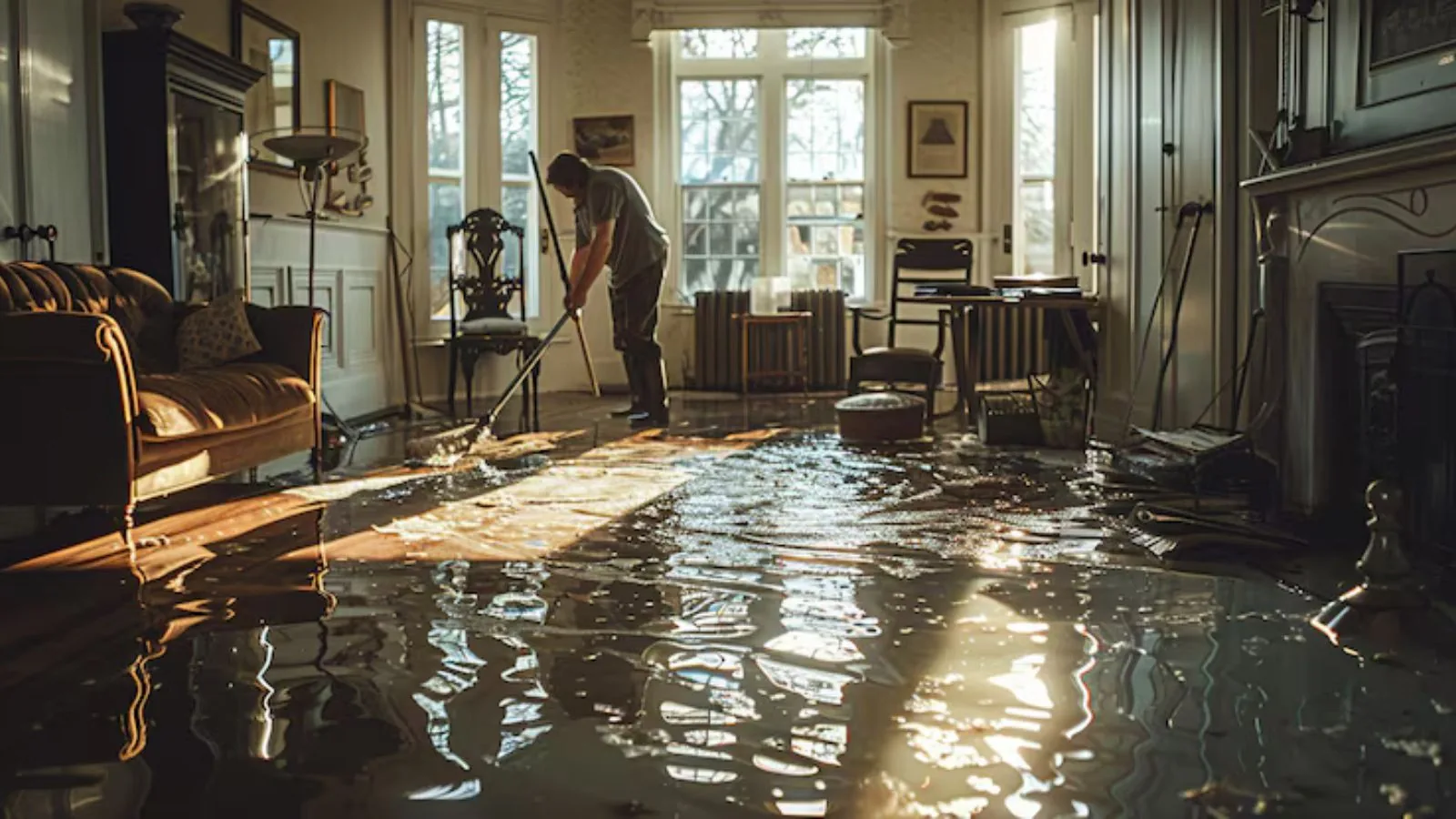
Water damage remediation sounds technical, but the sequence is easy to follow. Stop the water, remove it, find what is hidden, dry it and prove it is dry. Each step depends on the one before.
This guide walks through the process as it usually runs on a home in Middletown. Your job may add or skip steps depending on the water type and the materials involved.
Step 1: The Call and Triage
The first call sets the pace. The dispatcher asks where the water is, what the source is and whether anyone is at risk. You get safety steps right away, such as shutting off the main valve or staying clear of wet electrical.
Details you share help the crew bring the right tools. A basement with several inches of water needs pumps. A ceiling leak needs ladders and containment. A sewage backup needs protective gear.
The sequence below follows the structure of the ANSI/IICRC S500 standard for professional water damage restoration, which orders safety, extraction, drying and verification.
Step 2: Source Control and Safety
Remediation cannot start while water is still coming in. The source is stopped or isolated. A plumber may need to repair the line, a roofer may need to tarp a roof and a utility may need to shut off service.
Safety checks happen at the same time. The crew looks for electrical hazards, slip risks and signs of contamination. Water that touched sewage or floodwater changes the plan.
Step 3: Extraction
Pumps and extractors remove standing water. Wet vacuums finish edges and corners. Carpet is extracted with weighted tools. Pad that cannot be saved is removed.
The faster water leaves the building, the less it spreads into drywall and subfloor. Extraction is the step with the biggest effect on the rest of the job.
Want to know what step your job is on? Call and ask.
Call (844) 950-6900Step 4: Moisture Mapping
Moisture meters and thermal cameras find water you cannot see. The crew measures walls, floors and ceilings and marks wet areas. A baseline reading from an unaffected room sets the drying goal.
Mapping also shows where to open walls and where to leave them alone. It keeps removal limited to what is needed.
| Tool | What it shows. |
|---|---|
| Pin or pinless moisture meter | Moisture content in wood and drywall. |
| Thermal imaging camera | Cool wet zones behind surfaces. |
| Hygrometer | Air humidity and temperature. |
| Probe thermometer | Surface and air temperature for drying calculations. |
Step 5: Removal of What Cannot Be Saved
Some materials cannot be dried safely. Saturated insulation, sagging drywall and carpet pad touched by contaminated water are common examples. Removal is limited to those items.
Removed materials are photographed and logged. That record supports your claim and helps your contractor plan the rebuild.
Step 6: Drying
Air movers and dehumidifiers dry the structure on a written plan. Equipment is placed along walls and floors, and the dehumidifiers keep room air dry so materials can release water.
Crews return daily to take readings and adjust equipment. Drying ends when wet materials match the baseline, not when the room feels dry.
- Place equipment based on the moisture map.
- Take readings at the same spots daily.
- Move or add equipment as readings change.
- Remove equipment only after drying goals are met.
Step 7: Cleaning, Deodorizing and Handoff
Surfaces are cleaned, and deodorizing is used if odor remains. Final readings are recorded. You receive a record of the work and a list of what remains for repair.
At this point a contractor takes over for drywall, flooring and paint. Ask your contractor to review the readings before they close any walls.
What Changes With Contaminated Water
Clean water jobs follow the steps above. Contaminated water adds containment, protective gear and disposal rules. Sealing the work area keeps contaminants from spreading to clean rooms.
Porous materials touched by contaminated water are removed rather than dried. Hard surfaces are cleaned and disinfected. Our sewage backup page and flood damage page explain these steps.
| Item | Clean water | Contaminated water. |
|---|---|---|
| Protective gear | Basic | Full protective equipment. |
| Carpet pad | Often replaced | Always removed. |
| Drywall | Often dried | Cut out. |
| Cleaning | Standard | Disinfection step added. |
Contents, Photos and Paperwork
Belongings in the wet zone are moved, cleaned or discarded. Items worth saving are separated from items that are not. Photos and lists help with insurance and with replacement.
Paperwork includes the scope, drying log, photos and final readings. Keep it in one folder. A contractor will ask for it, and so will your insurer.
Ask the crew for a copy before the equipment leaves.
Signs the Job Is Going Well
- You get daily updates on readings.
- Equipment is moved when the numbers say so.
- Removal is limited to what the readings support.
- The scope matches what you were told.
- Questions get plain answers.
If any of these are missing, ask. A clear process is easier to trust than a vague one.
Questions You Can Ask at Each Step
- At triage: what should I do before the crew arrives?
- At extraction: what water category are we dealing with?
- At mapping: what are the baseline readings?
- At removal: why does this material need to go?
- At drying: when will you check the numbers again?
- At handoff: can I have the log and photos?
Clear questions get clear answers. A good crew welcomes them.
Middletown Note: Older Homes and Hidden Moisture
Many houses in Middletown date from earlier decades, and older construction can hide water. Plaster walls, wood framing and layered flooring hold moisture in ways newer drywall homes do not. That makes mapping before removal especially valuable, since it prevents tearing out walls that can dry in place.
If your home is older, tell the dispatcher when you call. Older coatings and finishes may need testing before they are disturbed. A short conversation up front avoids surprises during the job.
Questions about this topic
Many jobs take several days of drying plus a day or two for setup and finish. Larger losses take longer.
Often not, though some rooms may be off limits. Contaminated water jobs may require temporary relocation.
It is the moisture level that matches normal for that material in your home. Crews measure unaffected areas to set it.
A contractor handles rebuilding. We provide readings and a scope to help them plan.
Often yes. Plaster, thick framing and layered floors can hold water longer. Mapping and daily readings guide the plan.
Next steps in Middletown
Related services include water extraction, structural drying and wall and drywall repair. We dispatch to Middletown, Trenton and Franklin.
If water is still in the house, call (844) 950-6900 any hour of the day or night.